


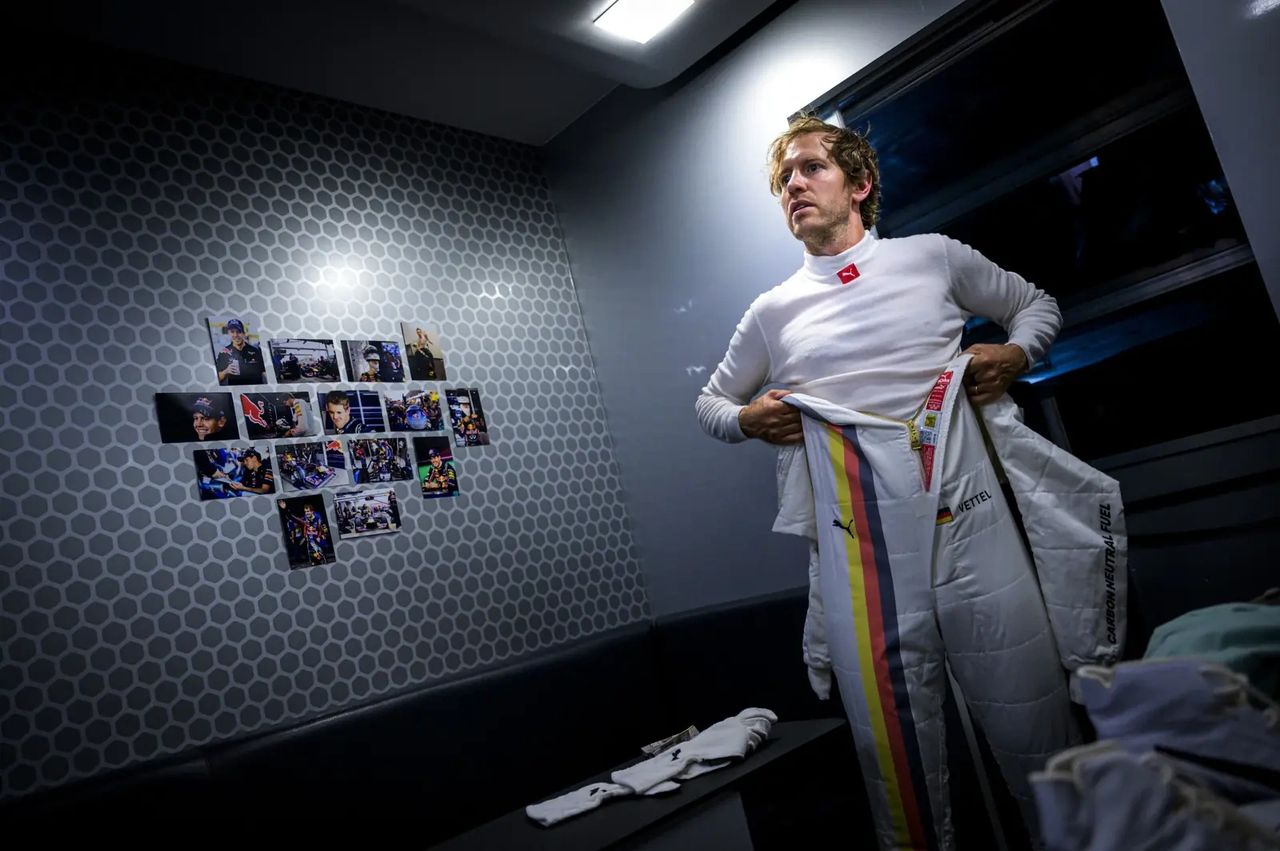
Sebastian Vettel hasn’t raced since 2022. Doesn’t mean he’s gone quiet. Not a chance.
The four-time champion still speaks up when the sport takes a direction he doesn’t buy. And with Formula 1 rolling out its biggest rule change in over a decade, he’s back in the debate.
The big sell
F1 bosses want you to believe 2026 is the future. Carbon-neutral fuel. Hybrid systems doing half the job instead of the token 15 percent we have now. Clean. Efficient. Still fast.
The line-up looks strong on paper. Ferrari and Mercedes, ever present. Red Bull Powertrains with Ford support. Honda returning to power Aston Martin. Audi arriving for the first time. Alpine? They’ve pulled the plug on Renault engines and signed with Mercedes.
That leaves five suppliers. The FIA calls it a win. Vettel isn’t convinced.
Déjà vu
He’s been here before.
Back in 2014, the sport shifted from screaming V8s to quieter, complex V6 hybrids. The pitch sounded clever. The reality? Not so much.
Vettel says the idea behind those regulations made sense. But the execution? A mess. It cost teams millions and gave very little back. Fans hated the sound. Smaller outfits bled money. Mercedes ran away with it.
The fear? That 2026 is the same story with a different spin.
Road relevance flipped
When hybrids first landed, F1 could argue it was ahead of the game. Road cars were nowhere near that level of technology.
Now the picture has flipped.
EVs in every showroom. Governments setting combustion bans. Endurance racing already knee-deep in hybrid hypercars, with hydrogen tech on the way. Even Formula E has carved out its lane.
Vettel’s verdict: road cars have already overtaken F1. The industry the series once claimed to inspire has left it behind.
Why not full electric?
So why not go all the way? If the world is heading EV, why isn’t Formula 1?
Vettel’s answer is simple. It wouldn’t work.
Formula E races are capped at 75 minutes including safety interruptions. That’s the edge of what current batteries can manage. F1 runs up to two hours. Full tilt. Different beast entirely.
The only way to do it on batteries? Double the size and weight of the cars. Nobody wants that. Not teams. Not fans. Not drivers.
So Vettel says F1 has to find its own path. Not a copy of Formula E.
The axle call
Here’s the part that really bothers him.
Under the new rules, energy recovery is limited to the rear axle. The front stays idle.
Vettel doesn’t get it. Harvesting energy is the right idea. But only from the back of the car? He calls it a missed opportunity.
The FIA argues it keeps costs down. One less system to build, one less headache for new suppliers. But for Vettel it’s another compromise. Another half-measure.
The politics at play
And here’s the bigger truth: the rules aren’t just about racing. They’re about politics.
The FIA wants to brand F1 as its flagship for net-zero targets. Liberty Media wants to sell a “green” product to younger fans. Teams want stability and manufacturer backing. Manufacturers want relevance, but not another budget arms race.
It’s a tug-of-war. Always has been.
On paper, five suppliers looks strong. But Vettel’s concern runs deeper. If those rules are watered down to attract them, does the sport still deserve to call itself the pinnacle?
Echoes of 2014
You can hear the repeat in his voice.
In 2014 the concept was fine. The delivery failed. Now he sees history lining up again.
That time, Mercedes dominated and the rest chased shadows. Fans drifted. Smaller teams counted the bills. The promised crossover into road car technology? Barely visible.
Now the stakes are higher. The industry has moved on. Public awareness has grown. Governments are setting hard deadlines. F1 doesn’t get another free pass.
Where it leaves the sport
There are positives. Vettel admits that. Carbon-neutral fuel is a huge step if it works. A heavier hybrid share makes sense. Five suppliers is healthier than relying on three.
But he cuts through the marketing. The question is still the same. Will the new rules actually deliver, or will they turn into another expensive compromise?
Bottom line
Sebastian Vettel doesn’t drive in F1 anymore. But his words still sting.
He called out the flaws in 2014. He sees the same mistakes forming now. For him the warning is clear: if 2026 becomes another half-measure, Formula 1 risks being both costly and irrelevant.
And for a sport that built its name on leading, that’s a dangerous place to be.