


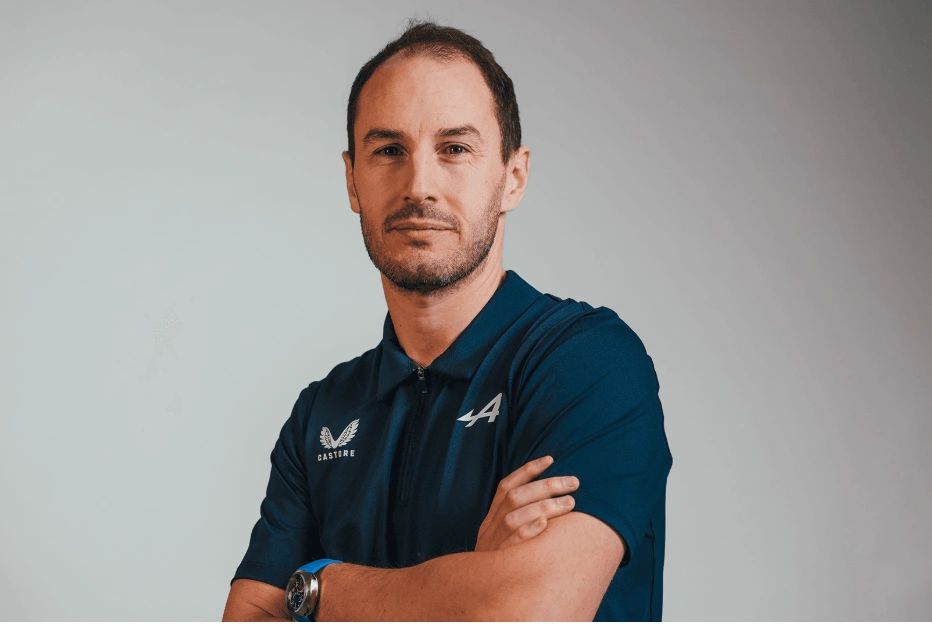
As Formula 2 and Formula 3 settled into the rhythm of their European campaign at Imola, there was a familiar—if slightly unexpected—face back in the paddock. Just weeks after stepping down from his high-profile role as Alpine F1 Team Principal, Oliver Oakes quietly returned to the heart of the junior single-seater world with Hitech GP, the outfit he helped build and still oversees.
While the headlines have recently followed him for reasons outside the cockpit, Oakes’ reappearance at Imola was a reminder of his lasting imprint on motorsport development—one that predates, and will likely outlast, his brief tenure at the top of Formula 1.
From F1 Boardroom to Pit Wall
Oakes’ time at Alpine was short-lived and came during a period of turbulence for the Enstone-based team. His resignation earlier this month followed personal developments unrelated to the team’s sporting operations—specifically, the legal troubles of his brother, William Oakes, who is facing fraud charges in the UK.
Though Oakes himself was not implicated, the timing and optics made it increasingly difficult to lead a team already grappling with internal change and external pressure. His decision to step down—and reportedly relocate temporarily to Dubai—was swift.
But at Imola, he was back where many in the paddock arguably associate him most: in the junior ranks, working quietly with Hitech’s Formula 2 and Formula 3 programs. There was no grand announcement or media round. Just a quiet return to the day-to-day work of guiding drivers, managing strategy, and keeping the team’s competitive edge sharp.
A Return to Foundations
Hitech GP is more than a side project for Oakes. The team has grown significantly under his leadership, evolving from its British F3 roots into a multi-series operation competing in F2, F3, GB3, British F4, and the F1 Academy.
Its role in developing talent is substantial. From George Russell and Lando Norris to more recent names like Liam Lawson and Isack Hadjar, Hitech has been part of many drivers’ upward journeys. Even as the F1 spotlight briefly turned his way, Oakes never strayed far from that mission: building the next generation.
That’s part of what made his Alpine move surprising to some—he’s always seemed most at home in the detail-oriented, often chaotic world of junior racing. Back at Imola, it looked like a return to that comfort zone.
The State of Play
Hitech’s F2 and F3 campaigns in 2025 have been steady, if not headline-grabbing. In F2, Dino Beganovic’s pole position at Imola (the team’s first of the season) was a major boost, and a performance that perhaps symbolized both Hitech’s technical ability and Beganovic’s potential as a top-tier prospect.
In F3, the team continues to be in the mix—though consistency has been elusive. Like many outfits in the category, they’re dealing with tight margins, a shuffled driver lineup, and the ever-present challenge of maximising short running time on tight weekends.
Oakes’ presence may not change outcomes overnight, but his eye for structure and long-term planning has long helped Hitech operate with more stability than some of its similarly-sized peers. His return to trackside operations could prove a timely boost as the championship intensifies through the European stretch.
What’s Next?
Officially, Oakes remains listed in some capacities at Alpine, though that’s widely expected to be a technicality. The day-to-day reins at Enstone have already shifted to Racing Director Dave Greenwood, at least for the short term.
For now, it seems Oakes is content to re-engage with the world he helped shape—working with engineers, mentoring young drivers, and keeping Hitech’s competitive spirit alive.
His brief brush with the top tier of the sport may be in the rearview mirror, but his impact on racing’s future is very much still unfolding.