

Ferrari took to Fiorano to reveal a 2026 contender that, by their own admission, is nowhere near a finished product. As Formula 1 heads into its most disruptive technical reset in decades, the Ferrari SF-26 felt less like a final answer and more like the opening move in a much longer fight. As the 72nd Formula 1 chassis to come out of Maranello, this car carries more than a new ruleset. It carries the weight of a season that could reshape Ferrari’s leadership, its competitive identity, and its driver future well beyond 2026.

Key Points – Ferrari SF-26
- Ferrari unveiled the SF-26 at Fiorano as its 72nd Formula 1 chassis and first car conceived entirely under the 2026 regulations
- The SF-26 abandons ground-effect aerodynamics, shifting toward a lighter, cleaner aero platform built around active aerodynamic elements
- Minimum weight target is set at 770 kg including the driver, forcing tighter packaging and reduced operating margins
- New Ferrari 067/6 power unit debuts, built around a 1.6-litre V6 with a single turbocharger operating up to 150,000 rpm
- Removal of the MGU-H places greater load on the MGU-K, now delivering up to 350 kW at speeds of up to 60,000 rpm
- Electrical systems operate at up to 1,000 V, with energy deployment and recovery limits reshaping race management
- Chassis and power unit have been developed as a single system to manage the near 50/50 split between combustion and electric energy
- SF-26 architecture prioritises in-season development flexibility rather than peak launch specification
- First on-track validation begins at the Barcelona shakedown ahead of Bahrain testing and the Australian Grand Prix
A Reset Without Theatre
Ferrari’s launch was quiet by design.
There were no lap-time promises and no attempt to frame the SF-26 as a car that has already cracked the new regulations. Instead, Ferrari were clear about what this is: a platform. Something robust enough to survive the opening phase of a regulation cycle that is going to punish early misunderstandings.
“It’s probably the biggest change in the regulations of Formula 1 over the last 25 years. We have to start from scratch on every single topic.”
Fred Vasseur – Team Principal, Scuderia Ferrari HP
The technical shift underneath that statement is severe. Ground-effect concepts are gone. In their place sits a car shaped by weight reduction, active aerodynamics, and a power unit that leans heavily on electrical performance. A 350 kW MGU-K doesn’t just change peak output. It changes how a driver builds a lap. Harvesting zones, deployment timing, and state-of-charge management stop being background processes and start becoming constant decisions.
The early races will expose who adapts fastest. Ferrari are preparing for that reality rather than pretending it can be shortcut.
Identity As An Anchor, Not A Crutch
Ferrari understands that this reset is emotional as well as technical.
Another rule change. Another rebuild. Another season that asks for belief before results. The return to gloss red is not nostalgia for nostalgia’s sake, continuing Ferrari’s recent use of heritage as reassurance during moments of change. It is reassurance. Something familiar for the Tifosi while the engineering underneath remains an unknown quantity.
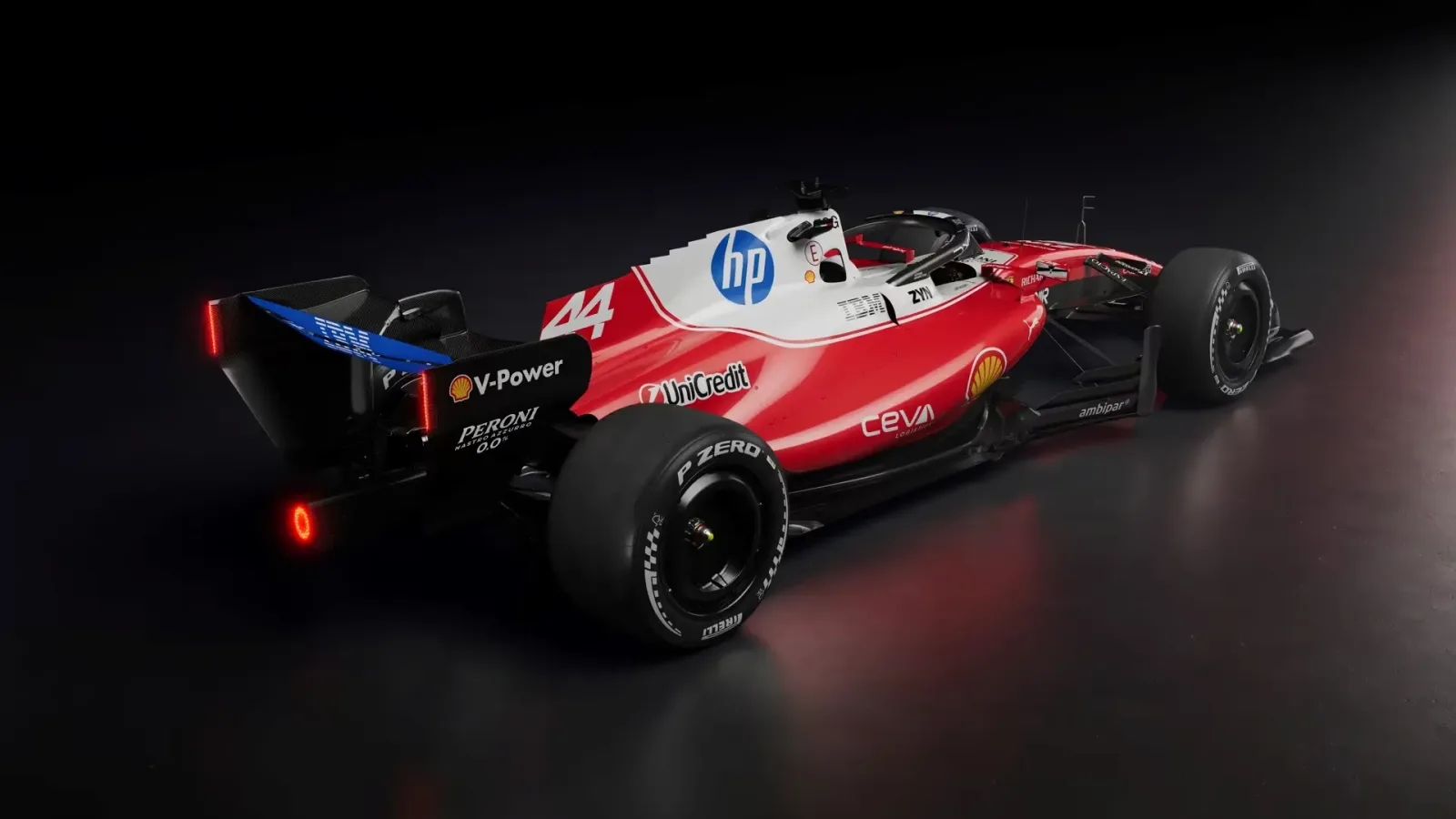
The white panels around the cockpit and engine cover reinforce that choice. Even the HP logo has been softened, sitting on white rather than cutting straight through the red. It’s still there, but it no longer dominates the visual identity. That restraint matters in Maranello, where patience has been stretched thin more than once over the past decade.
Ferrari have chosen calm over confrontation. Not to mask uncertainty, but to stop it spiralling.
Why 2026 Is Pivotal For Ferrari
The SF-26 doesn’t exist in a vacuum.
For Fred Vasseur, this season is a line in the sand, despite the security of a recently extended contract. He has stability on paper, but Ferrari has never measured success in process. In Maranello, titles are the only currency that truly counts. Another season without a genuine championship fight sharpens the pressure, regardless of how coherent the rebuild looks internally.
The drivers sit at their own crossroads, with contract timelines now tightly aligned to Ferrari’s 2026 reset.
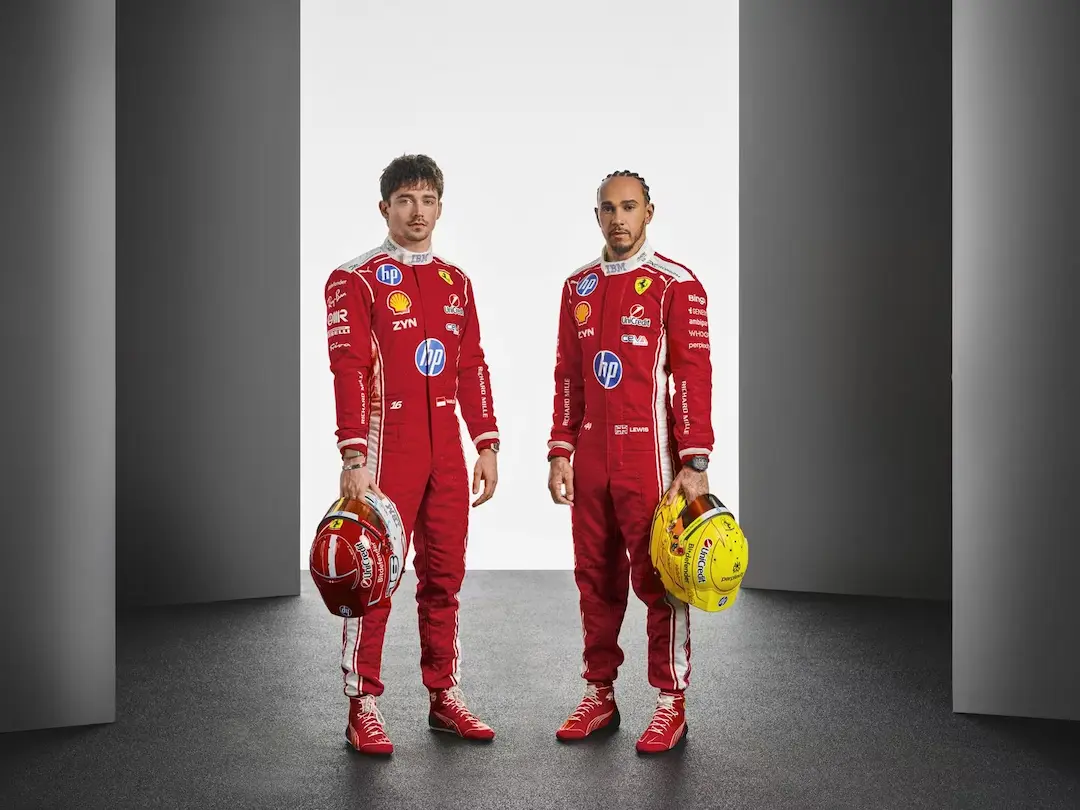
Lewis Hamilton enters 2026 with time very much in focus. Another year spent in the midfield out of the title fight forces difficult questions, whatever the contract says. After one of the weakest seasons of his career in 2025, the SF-26 has to offer belief quickly for a driver in the twilight of his career.
Charles Leclerc remains Ferrari’s stable poster driver, but his loyalty has always come with an expectation attached, a real risk to the dream of driving for Ferrari and winning with Ferrari. He has been clear in the past. He needs a car capable of winning titles. If this regulation cycle fails to deliver that, Ferrari risk more than lost points. They risk losing their prized asset to one of their rivals as he enters the peak of his career.
With much of the grid approaching contract expiry, performance now carries strategic consequences and options suddenly become available.
Learning First, Pressure Always
Ferrari’s roadmap is clear enough and they have been open about it.
Phase one in Barcelona gives correlation and a starting reference point.
Bahrain exposes flaws and the potential issues.
Australia delivers reality and the final test of competitive action as the litmus test of just where the team is in relation to the rest of the grid.
“In this initial phase, the priority will be to learn as much as possible and to start building solid foundations ahead of the opening race.”
Fred Vasseur – Team Principal, Scuderia Ferrari HP
Learning is not caution for its own sake. Under these regulations, early misjudgements harden into long-term disadvantage. Energy deployment strategies, thermal behaviour, and active aero usage will define competitiveness long before major upgrades arrive.
A wrong step in development for Ferrari could well result in issues on and off the track. Previous development packages by the team have often come in waves. The issue with this is if you get it wrong, you have lost lots of ground on your rivals, potentially giving you an impossible mountain to scale back to the top.
Ferrari are choosing discipline because they know exactly what happens when ambition outruns execution.
Coffee Corner Take
Let’s be real. Ferrari hasn’t just launched a car. They’ve launched a gamble.
The SF-26 reveal was stripped of the usual Maranello theatre, and that wasn’t accidental. By calling this a “learning platform” rather than a world-beater, Fred Vasseur is trying to manage the most unforgiving pressure cooker in sport. He knows that if this car hits the track in Bahrain and looks anonymous, talk of patience won’t survive the opening stint.
The return to gloss red and white is smart branding. It gives the Tifosi something familiar to hold onto while the engineering underneath remains a complete unknown. Comfort matters in Maranello. But liveries don’t close lap time.
For me, the real story isn’t the MGU-K or active aero. It’s the clock. Lewis Hamilton didn’t move to Italy to spend his forties “collecting data,” and Charles Leclerc’s loyalty should never be mistaken for a permanent hall pass. If the SF-26 doesn’t show a clear, aggressive development direction by the European rounds, the calm Vasseur is projecting now will start to look like time lost.
Ferrari has reached a crossroads. They’ve played it safe with the launch. Now they have to prove they haven’t played it too safe with the car.
Join the Coffee Corner Motorsport Community
Dive into full race reports, data stories, and behind-the-scenes features
across Formula 1, Formula 2, and beyond.