


Monza after the race. Grey skies. Empty grandstands. Real homework starts here.
Pirelli didn’t get fireworks this time. Just data, a proper test of next year’s rubber, and wet-to-dry crossover data that matters for 2026.
Key points
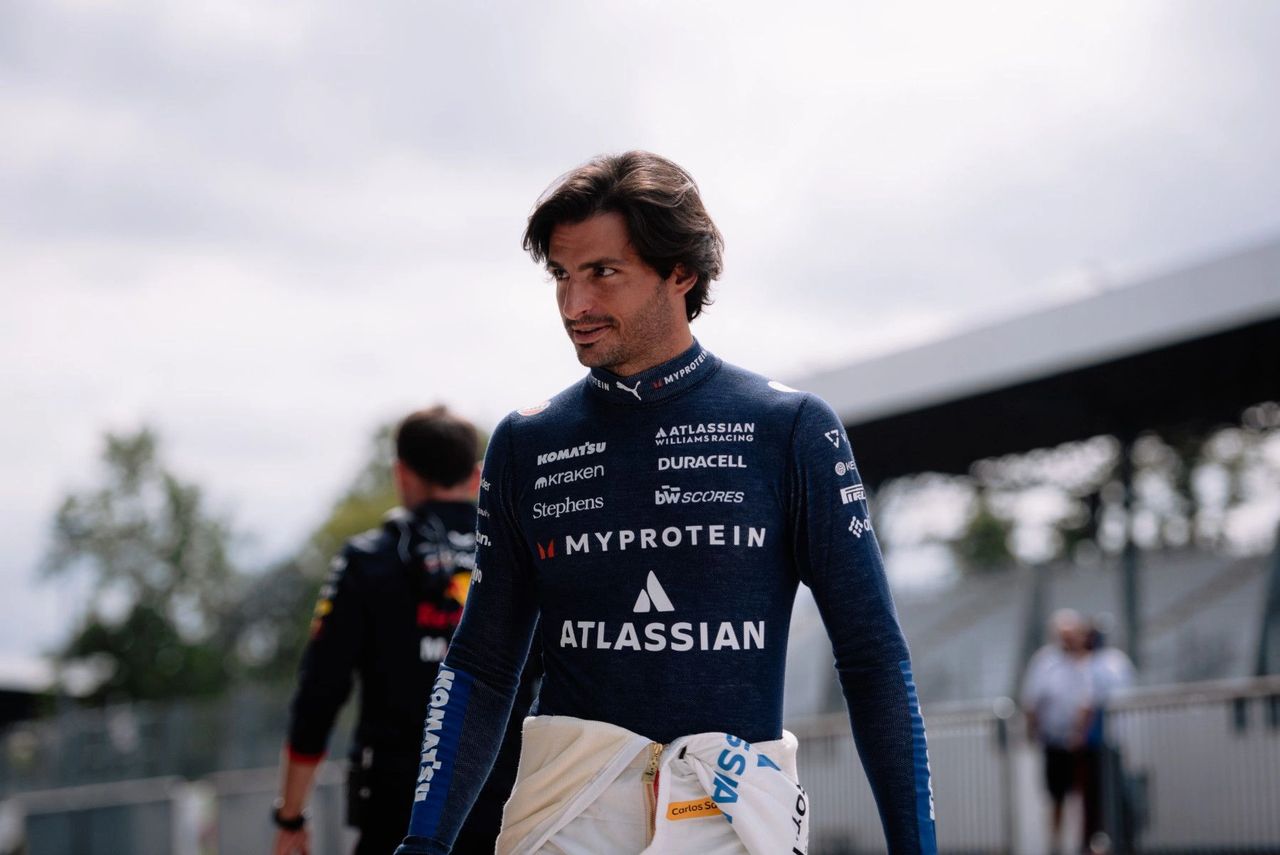
- Drivers: Carlos Sainz (Williams mule), Isack Hadjar (VCARB01 mule)
- Compounds: Inters, C4, C5, and C6 slick prototypes, narrower 2026 spec, same 18-inch diameter, reduced tread front and rear
- Best laps: Sainz, 57 laps, 1:22.108 best. Hadjar, 56 laps, 1:23.825 best
- Mileage: 467 laps over two days, about 2,700 km in total with Verstappen, Tsunoda, and Drugovich included
- Conditions: Rain in the morning, dry line for afternoon runs. Track temp 27–32°C, air 20–25°C
- Next tests: Mugello for harder compounds, Mexico City for softer, Abu Dhabi to sign off the season
- Related: Previous Monza Pirelli tyre test
Sainz and Hadjar were up early. Rain delayed everything, soaking the circuit and handing Pirelli a rare treat: real wet-to-dry crossover, no hoses, no tricks.
Both teams ran their modified mule cars. Williams rolled out the FW47. Racing Bulls brought the VCARB01. Each was set up for the narrower 2026 tyres, same 18-inch diameter, less tread front and rear.
Both drivers ran the Pirelli Cinturato Intermediate as the track dried, switching over to slicks for the main test runs.
By the time they got out, it was still damp. Sainz and Hadjar started on intermediates, then swapped to C4, C5, and C6 slicks as a dry line finally came up. That’s exactly what Pirelli wanted. Map the crossover point. See when the inters give up and the slicks come alive.
Mileage and lap times
- Carlos Sainz – 57 laps (1:22.108 best), Williams mule
- Isack Hadjar – 56 laps (1:23.825 best), VCARB01 mule
Not much between them. Track temps climbed from 27°C to 32°C. Air temp hovered 20 to 25°C.
Add it all up and you get 467 laps over two days. With Verstappen, Tsunoda, and Drugovich in the mix, the test total hit about 2,700 kilometres. That’s a huge shift, even by F1 standards.
Mule cars and 2026 prototype tyres
Both squads worked through the softest compounds on offer. Pirelli’s priority was simple. Find the crossover point. Learn how each new tyre feels. Grab as much wet-to-dry data as the Monza weather allowed.
What’s next?
Next stop, Mugello by the end of September, with a focus on harder compounds for 2026.
Then Mexico City, two more days on the soft stuff, just after the race weekend. Abu Dhabi wraps it up in December. Homologation follows.
Pirelli’s crew packed up with what they needed. Real lap times. Real crossover data. Another box ticked for the 2026 project.
Want more Formula 1 coverage?
Dive into race reports, driver market news, and technical analysis in the Coffee Corner Motorsport F1 Hub.
Share the story. Grow the community.