


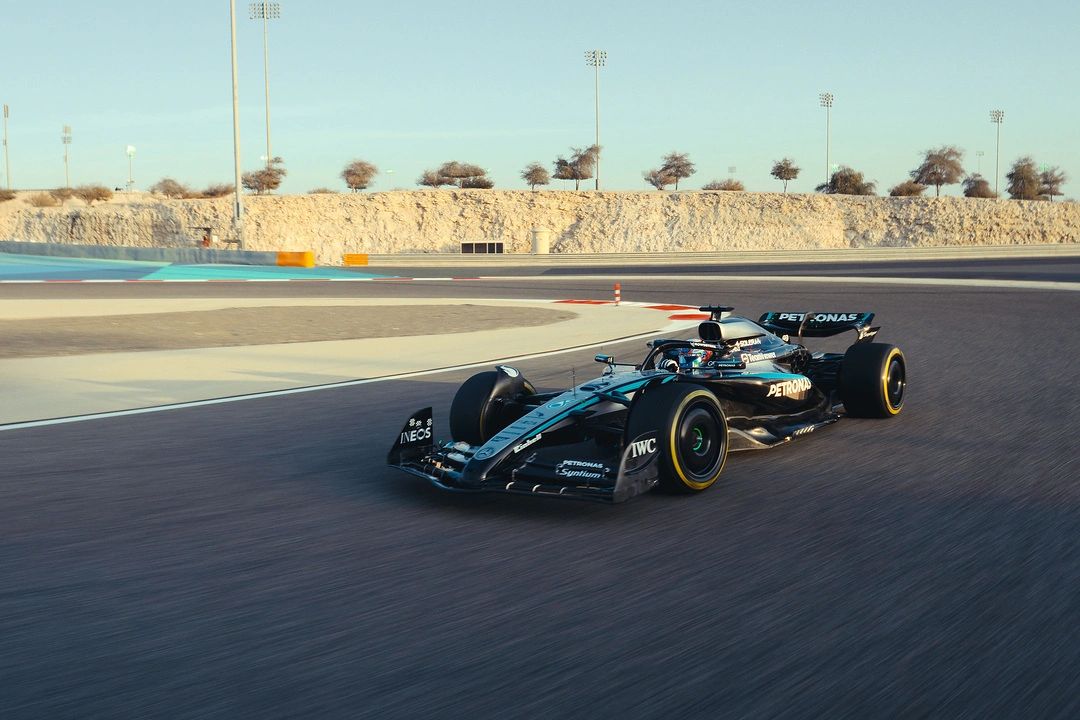
Mercedes has today launched a bid to reclaim its position at the pinnacle of both the grid and the sustainability grid with its proposal to utilise sustainable carbon fibre in the W16 during the 2025 season, becoming the first team in Formula 1 to implement such a measure.
The team has announced its collaboration with the FIA within the confines of the current regulations to qualify and apply sustainable carbon fibre composites to the W16 cars. The objective is to demonstrate that these components not only meet the same technically demanding requirements as traditional materials but will not compromise performance on the track.
To achieve this, the Brackley-based team will implement two distinct programs, which will be introduced later this year. One of these initiatives will address the resin system, while the other will focus on the carbon fibre itself. In a press release released today, the team underscored the crucial role of continuous innovation and ongoing support from its supply chain in the identification and subsequent qualification of sustainable materials solutions. Each carbon fibre composite component involves multiple suppliers, ranging from four to eight, to deliver the final product.
Presently, the W16 incorporates approximately carbon fibre composites that constitute approximately 75% of the race car’s materials. The team has outlined the intricate process it undertakes, stating,
“Carbon fibre composites are primarily composed of two fundamental components: the fibres and the resin system. By weight, approximately 60% of the composite material is constituted by fibres, while 40% is composed by the resin system.
The impregnation of the fibres with the resin system, followed by curing, results in a lightweight material with exceptional mechanical performance, which is indispensable to meet the unforgiving demands of Formula 1.”
To qualify a carbon fibre composite material for use in a race car, it must undergo rigorous laboratory testing to ascertain its technical properties and performance. Subsequently, the material must undergo further trials and verification to ensure its behaviour aligns with expectations.
Given the team’s commitment to achieving Net Zero across all scopes by 2040, which includes sustainable fuels, sustainable aviation fuel, biofuels, site redevelopment and travel, changes to the campus, lift sharing, and carbon removal, while there are obvious environmental benefits, the team also hopes these initiatives will enable them to reduce costs below the cost cap and reinvest those savings to enhance the car’s performance and contribute to their ambition to become one of the most sustainable global sports teams.
Head of Sustainability Alice Ashpitel said: “We are proud to be at the forefront of sustainable innovation within our sport.
“Leadership must be driven by innovation and our team’s efforts in this space are the latest demonstration of our ambition to become one of the world’s most sustainable global sports teams.
“We look forward to exploring the application of sustainable materials this season.” With Toto Wolff Team Principle & CEO of Mercedes-AMG Petronas Formula 1 team adding “When you combine performance and innovation, you create progress. I am proud to lead a team of problem solvers who are committed to driving sustainable change.
“Collectively we are moving the dial on sustainable products and demonstrating that Formula 1 continues to be the fastest laboratory in the world.”