


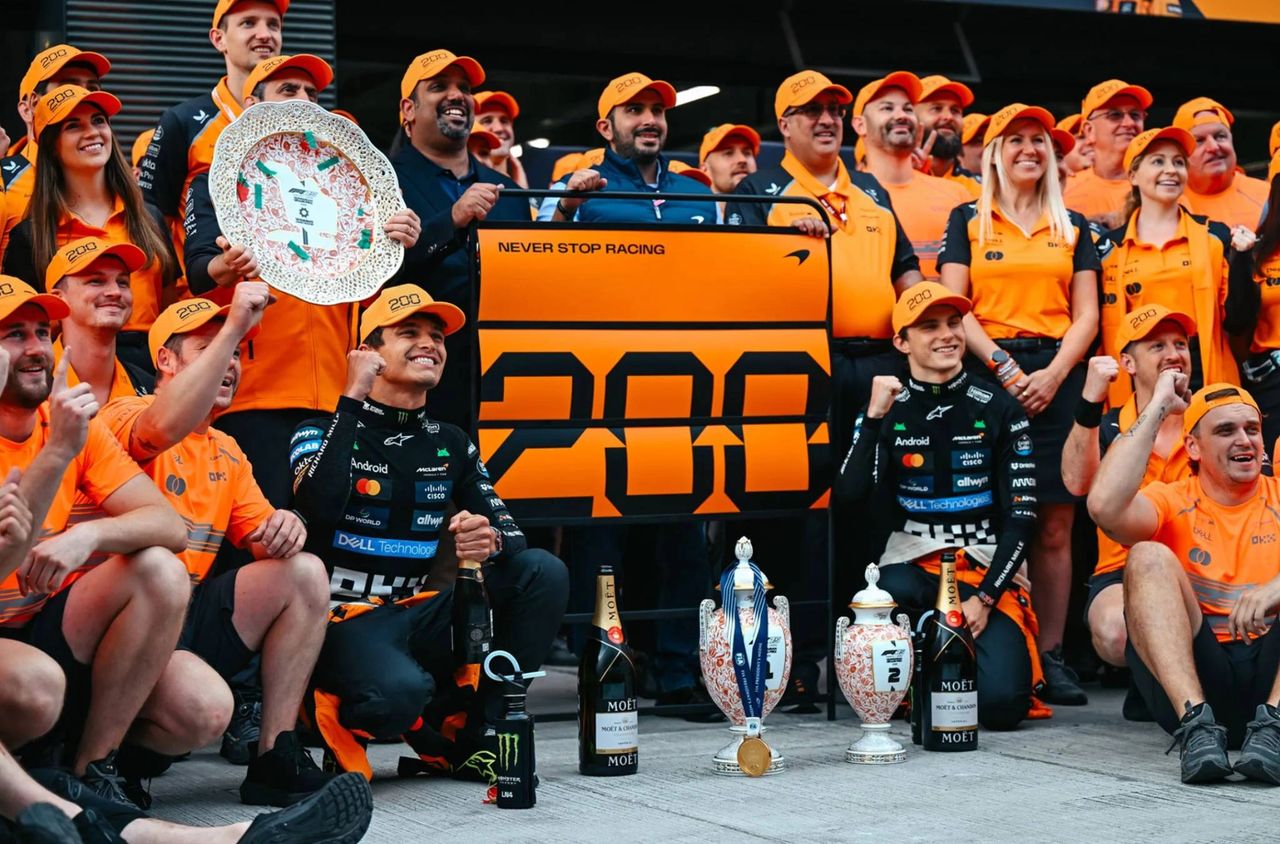
Oscar Piastri led early. Lando Norris won late. And somewhere in between, McLaren made the call to split their race strategies at the Hungarian Grand Prix.
It worked. But it also raised eyebrows.
Norris was shifted to a one-stop strategy, while Piastri stuck with the original two-stopper. By the flag, Norris was out front on worn hards. Piastri was second, closing in, but ran out of time.
The result? A clean 1–2. The conversation online? Not so clean.
Some fans saw a strategic masterstroke. Others saw a subtle form of favouritism. Did McLaren make the call to give Norris a better shot at victory? Or did circumstance dictate the outcome?
Strategy or sacrifice?
Both drivers started on mediums. Piastri was running ahead of Norris early on and looked to be managing the pace. Then Ferrari pitted Leclerc, and McLaren made their move, reacting immediately by bringing in Oscar to cover off the undercut.
That’s when things changed.
Piastri was now locked into a two-stop. Norris was left out. And with clean air and more flexibility, Lando was able to stretch his stint and eventually switch to a one-stop race. It turned out to be race-winning.
Could Piastri have done the same? In hindsight, maybe. But at the time, Leclerc’s pace was strong and McLaren had no way of knowing it would fall off the way it did later in the race. They were racing Ferrari for the win. Covering off the undercut was the sensible move. And giving Oscar the best chance at track position felt like the right call.
Ironically, if Norris had made a cleaner start and stayed in contention with the Ferraris, the situation may have played out differently. With both McLarens running close to the front, the team could have split the strategy from a position of strength, potentially even letting the lead driver choose the tyre plan. Instead, they had to react. And that reaction locked Piastri into a two-stop, while opening the door for Norris to roll the dice.
Piastri drove well, passed when he needed to, and brought home second. But by the final stint, the balance had already shifted.
No orders, but the outcome split the garage
There were no team instructions. No radio drama. No swap. But for some watching, it didn’t feel neutral.
McLaren made the call in real time. One that favoured safety with Piastri and flexibility with Norris. Lando wasn’t ahead at the time, but ended up with the more powerful strategy simply by being left out longer.
Andrea Stella was quick to defend the logic.
“When Leclerc stopped, it was the right time to stop Oscar. If we left him out, we would have lost track position. And you don’t let that go unless there’s something really strong to gain.”
He was also clear that both drivers had executed flawlessly.
“They both did an excellent job. It was very, very close. But in the end, the difference came from how the race played out around them.”
Perception is its own strategy
This wasn’t about favouritism. But it was a moment. One of those fine-margin decisions that starts to build context as a title race unfolds.
It’s also worth saying. Most teams adapt strategy mid-race. It’s standard practice. McLaren weren’t scripting the outcome, they were responding to it. But because it led to a win for one and a lost shot for the other, it’s being picked apart.
That’s racing. That’s pressure. And when your drivers are this evenly matched, even a normal decision gets amplified.
Piastri and Norris are now separated by just nine points in the standings. And McLaren are entering territory where every choice, every pit stop, every on-air radio call will be scrutinised.
They got the result. The strategy worked. But the conversation isn’t going away.
Because when you’ve got two championship-calibre drivers in the same garage, balance matters. And Hungary tilted it. Even just slightly.