


McLaren Red Bull F1 finances have never looked more different than they do right now.
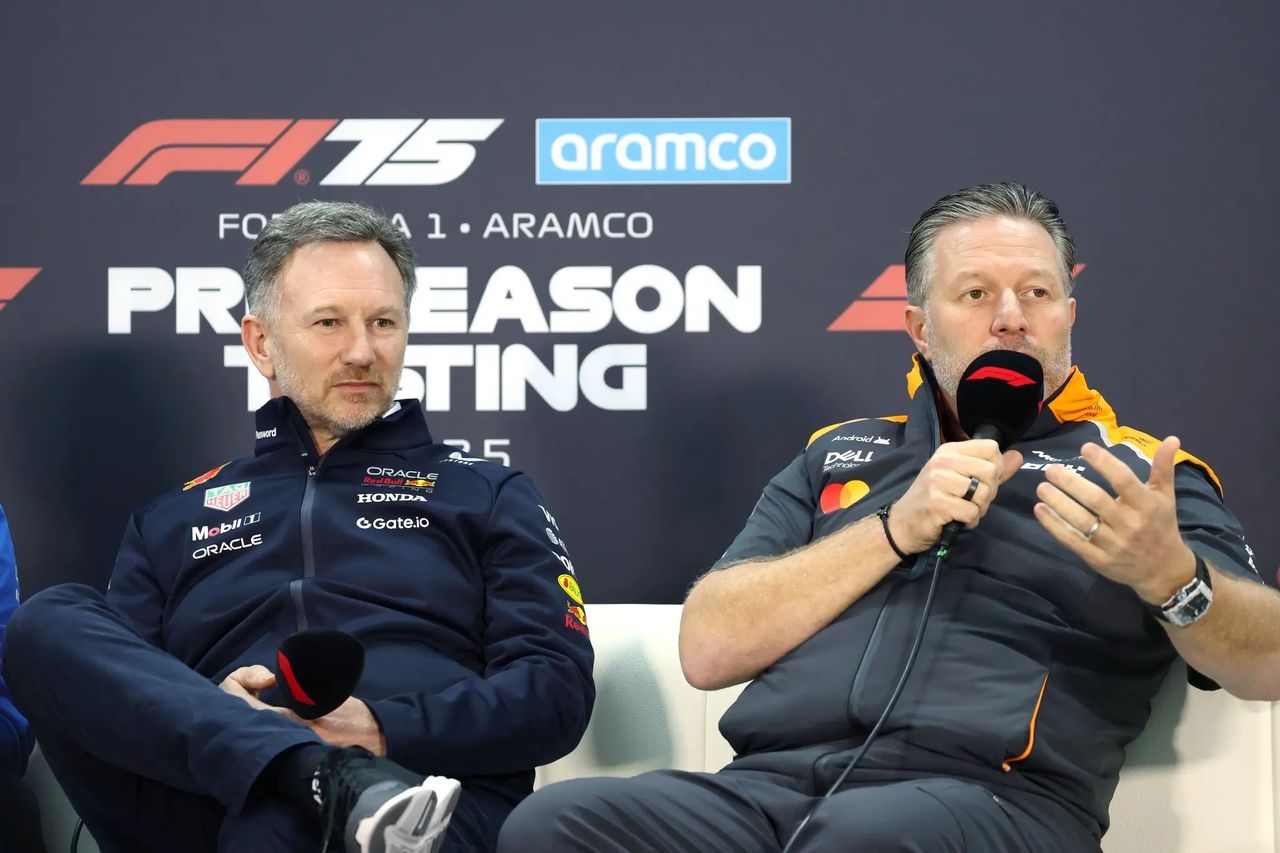
In 2024, McLaren reported a £54.2m profit, while Red Bull Racing’s accounts showed just £1.68m. The figures underline a growing financial split in Formula 1’s new era.
Key Points – McLaren Red Bull F1 finances
- McLaren posted a £54.2m profit in 2024 on turnover of £530.3m
- Red Bull Racing declared a £1.68m profit on £314.4m turnover
- McLaren won its first Constructors’ Championship since 1998
- Minority shareholders exited on 2 September 2025, leaving Mumtalakat in control with CYVN as a non-controlling partner
- Mastercard joins McLaren as 2026 naming partner worth ~£74m per year
- Red Bull Racing’s profit only covers Milton Keynes, Visa Cash App Racing Bulls file separately
- F1 prize money is paid through the Concorde Agreement, linked to commercial growth
- Brad Pitt’s F1: The Movie delivered record profits for the sport
- Christian Horner exit settlement reported at $100m (£74m)
McLaren’s F1 Profits and Return to the Top
McLaren Racing closed 2024 with £54.2 million in profit. Turnover came in at £530.3m, almost £490m of that from Formula 1. Not long ago the same group was cutting staff and selling assets to keep the lights on.
These days the financial power sits in Bahrain. Mumtalakat, the kingdom’s sovereign wealth fund, holds the keys to McLaren Group and Racing. On 2 September 2025 it teamed up with Abu Dhabi’s CYVN Holdings to buy out MSP Sports Capital and the other minority backers. Mumtalakat took majority control, with CYVN in as a smaller, non-controlling partner.
The result is simple. McLaren Racing now sits fully under Gulf ownership. The big calls are made in Manama, with Abu Dhabi money supporting in the background.
Zak Brown’s directors’ report described 2024 as “a triumphant return to the top after 26 years.” The F1 Constructors’ crown capped a year that also saw Pato O’Ward win three times in IndyCar and Sam Bird hand McLaren its first Formula E victory. But make no mistake. F1 is the core revenue stream, and sponsors are doubling down. Mastercard’s naming deal for 2026, estimated at £74 million annually, sits alongside rising prize money now north of £65 million.
From existential crisis to billion-pound valuations. McLaren’s model is proof that investor confidence in F1 has never been higher.
Red Bull Racing Finances in Transition
Red Bull’s books tell a smaller story. Just £1.68m profit on £314.4m turnover. With Verstappen still winning, the numbers look restrained beside McLaren’s windfall.
Important to note. These figures only cover Milton Keynes. Red Bull also owns the Faenza squad, Visa Cash App Racing Bulls, but that team files its accounts separately in Italy. Under the Concorde Agreement every entrant has to stand alone, even if both sit under Red Bull GmbH in the end.
That separation explains why Red Bull Racing’s books can look so slim. The sponsorship empire is spread across two sets of ledgers. Visa and Cash App income is routed to Faenza. Oracle flows through Milton Keynes. Together they form part of Red Bull GmbH’s global marketing machine, but in black and white UK filings the team’s profit looks far smaller than its true brand impact.
On paper, Red Bull Racing shows a narrow surplus. In reality, both teams act as twin flagships for an energy drinks company selling over 12 billion cans a year. The money is not measured only in profit lines, but in the exposure F1 delivers worldwide.
Christian Horner’s departure only sharpened the focus. His £7.04 million remuneration and $100m settlement underline how tightly he was tied to Red Bull’s F1 operations, across both teams’ deals. With him gone, the Salzburg board has pulled the levers closer to home.
👉 Read my full feature on Christian Horner’s $100m settlement here
Formula 1 Prize Money and the Concorde Agreement
A full breakdown of how the 2025 Formula 1 prize fund is calculated and distributed can be found here.
A big part of team income does not come from sponsors at all. It comes from the sport itself. The Concorde Agreement sets out how Formula One Management pays prize money and bonuses, based on Constructors’ standings and historic rights.
For 2024, Red Bull received an estimated £65 million from this central pool. McLaren’s title win is expected to bring in over £67 million for 2025, a year-on-year increase of almost £15 million.
Where does that money come from? The commercial rights holder takes in billions through TV deals, race hosting fees, hospitality, and a growing portfolio of side projects. Liberty Media’s push into events like the Las Vegas Grand Prix, the Netflix boom, and the Brad Pitt F1 movie all feed the pot. Even if fans dislike the glitzy commercial layer, it directly benefits teams when the end-of-year cheques are cut.
The Movie Effect: Brad Pitt and Record F1 Profits
F1: The Movie, led by Brad Pitt, smashed box office records. It grossed $144 million on opening weekend and has already cleared $300 million worldwide, becoming Apple’s biggest ever theatrical release.
Beyond the cinema tills, it poured more than $40 million in sponsorship money into the sport, with blue-chip brands buying their way onto cars, liveries, and the storyline itself. Formula 1 Group confirmed the film contributed to record quarterly profits, a 40 percent year-on-year jump in revenue.
That boost flows back to the grid. Teams may grumble about Hollywood gloss, but through the Concorde Agreement the profits find their way into prize money and bonus pools. The end result is bigger cheques for McLaren, Red Bull, and everyone else.
👉 Read my full review of F1: The Movie here
The Cost Cap Context
The budget cap continues to reshape Formula 1 economics. Smaller teams like Haas and Alpine have posted profits for the first time. But McLaren’s surge in 2024 shows what is possible when winning on track aligns with commercial expansion.
Red Bull’s more modest return illustrates that the scoreboard does not always equal financial dominance. The team remains one of F1’s biggest marketing machines, but as a line item within Red Bull GmbH, its financials tell a different story.
Conclusion
McLaren’s revival is a case study in investor-driven growth. Red Bull’s figures highlight the politics of being tied to a global consumer brand. One team measured in cash flow, the other in brand reach.
On the track, they are still the benchmark. Off it, their balance sheets show Formula 1’s new era is as much about who holds the shares, and what the parent company wants, as it is about race wins.
Figures sourced from Companies House filings (UK), team statements, Reuters (2 September 2025), and public shareholder disclosures.
FAQ: McLaren and Red Bull F1 Finances
Who owns McLaren Racing?
McLaren Racing is controlled by Bahrain’s Mumtalakat sovereign wealth fund. On 2 September 2025, Mumtalakat and Abu Dhabi’s CYVN Holdings bought out MSP Sports Capital and other minority investors. Mumtalakat is now the majority owner with CYVN a non-controlling partner.
Did McLaren really make more than £50m profit?
Yes. McLaren reported a £54.2m post-tax profit in 2024, fuelled by F1 prize money, sponsorship, and commercial growth.
Why are Red Bull Racing’s profits so low compared to McLaren?
Because Red Bull Racing is only one part of Red Bull GmbH. The Milton Keynes team files its own UK accounts, while Visa Cash App Racing Bulls in Faenza files separately in Italy. Both are brand investments for the global energy drink business, which measures success more in marketing reach than profit.
Do Red Bull’s profits include Racing Bulls?
No. Each team files separately. Red Bull Racing’s £1.68m profit only covers the Milton Keynes operation.
How does F1 prize money actually work?
Prize money is distributed through the Concorde Agreement, a commercial contract between teams and Formula One Management. The pool comes from TV deals, race hosting fees, hospitality, and wider commercial projects like Las Vegas and the Brad Pitt F1 movie. Teams earn based on championship standings and bonus clauses.
Do teams really benefit from projects like the F1 movie?
Yes. F1: The Movie alone generated $300m+ in box office and more than $40m in sponsorship placements. Formula 1 Group reported record quarterly profits, which increase the central pool for prize money. Even if fans dislike the Hollywood gloss, the teams’ bank balances do not.
Join the Coffee Corner Motorsport Community
Dive into full race reports, data stories, and behind-the-scenes features
across Formula 1, Formula 2, and beyond.
If this helped, you can support this work by buying me a coffee.