


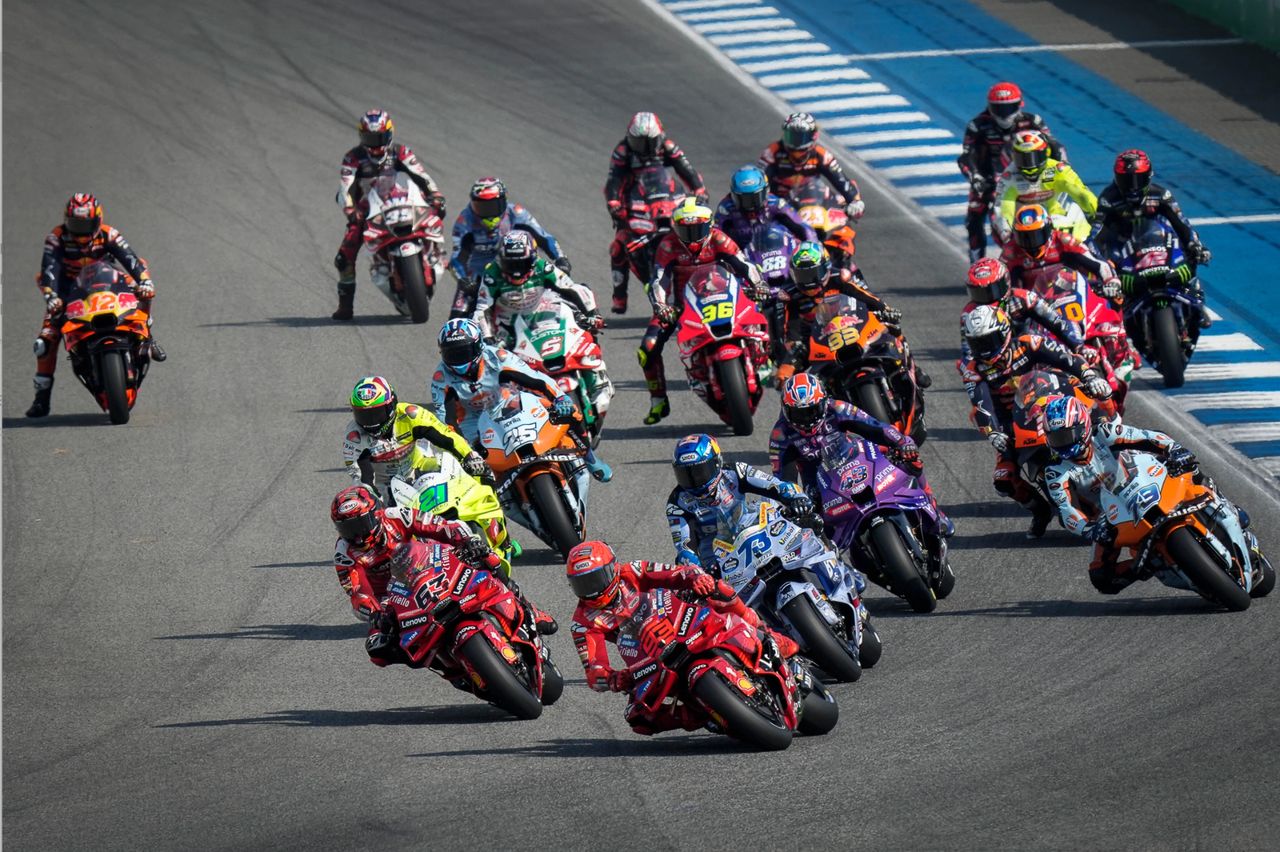
It’s official. The European Commission has approved Liberty Media’s takeover of MotoGP™ rights holder Dorna Sports. With no further conditions, the deal will close by July 3, 2025, handing control of the world’s top motorcycle series to the same group that owns Formula 1.
Liberty will hold 84% of Dorna, while the remaining 16% stays with MotoGP’s current management. That includes CEO Carmelo Ezpeleta, who’s led the series since 1998 and will remain in charge.
This is a major shift not just for MotoGP, but for motorsport more broadly. Liberty’s ownership of F1 has transformed the sport’s global reach over the past seven years. Now, with MotoGP under its wing, it’s aiming to do the same for two-wheeled racing.
Why MotoGP – And Why Now?
From the outside, this might look like an easy win for Liberty: a top-level racing series with big names, passionate fans, and lots of untapped potential. But MotoGP has always faced challenges in converting on-track brilliance into mainstream success.
Compared to F1, MotoGP still lags in global visibility, media reach, and sponsorship depth, especially in North America and key emerging markets. Despite record crowds and thrilling races, the sport hasn’t fully capitalised on its appeal. That’s what Liberty hopes to change.
“MotoGP is a highly attractive premium sports asset with incredible racing, a passionate fanbase, and a strong cash flow profile,” said Liberty Media CEO Derek Chang. “We believe the sport and brand have significant growth potential.”
Key areas Liberty will target include better digital content, global expansion, and new commercial partnerships. It’s likely we’ll also see crossover efforts between MotoGP and F1, whether through shared platforms, joint marketing, or behind-the-scenes storytelling.
Ezpeleta Stays -But Expect Changes
Ezpeleta’s continued leadership brings continuity. Under his watch, MotoGP has modernised its safety, rebuilt its class structure, and developed a clear path from Moto3 to the premier class. He’s steered the series through the Rossi era, the Márquez era, and now a new wave of stars.
“We are very happy that the European Commission has approved the transaction,” Ezpeleta said. “This is an important milestone confirming the even brighter future that lies ahead for MotoGP.”
Still, Liberty’s influence will be felt. MotoGP previously experimented with a documentary series (“MotoGP Unlimited”) but pulled back after creative disagreements. Expect a reboot with proper backing and alignment with Liberty’s F1 content strategy.
The Bigger Picture: Motorsport as a Portfolio
Liberty isn’t just buying a racing series. It’s building a sports empire. Alongside F1, it owns a major stake in Live Nation, the events giant, and has invested in platforms like Quint to reach younger audiences.
MotoGP adds another layer. It strengthens Liberty’s bargaining power across media rights and advertising deals. It opens the door to bundled experiences think MotoGP and F1 double weekends or shared fan membership platforms. It also provides room to grow in markets where F1 still faces resistance.
More than anything, it signals Liberty’s belief that motorsport in multiple forms is still under-monetised and undervalued. And they want to be the ones to fix that.
What Changes Now?
In the short term, not much. MotoGP’s calendar, regulations, and racing DNA stay untouched. But behind the scenes, transformation has already begun.
Expect deeper data-driven strategies, stronger branding, and smarter media packaging. Watch for a renewed push in the U.S., where MotoGP has long struggled for traction. And don’t rule out tighter alignment between F1 and MotoGP infrastructure, especially at the promoter level.
The racing will stay fast. The show around it will get sharper. And MotoGP, long beloved by hardcore fans, may finally get the global spotlight it deserves.
Join the Coffee Corner Motorsport Community
Dive into full race reports, data stories, and behind-the-scenes features
across MotoGP and the wider world of motorsport.
If this helped, you can support this work by buying me a coffee.