


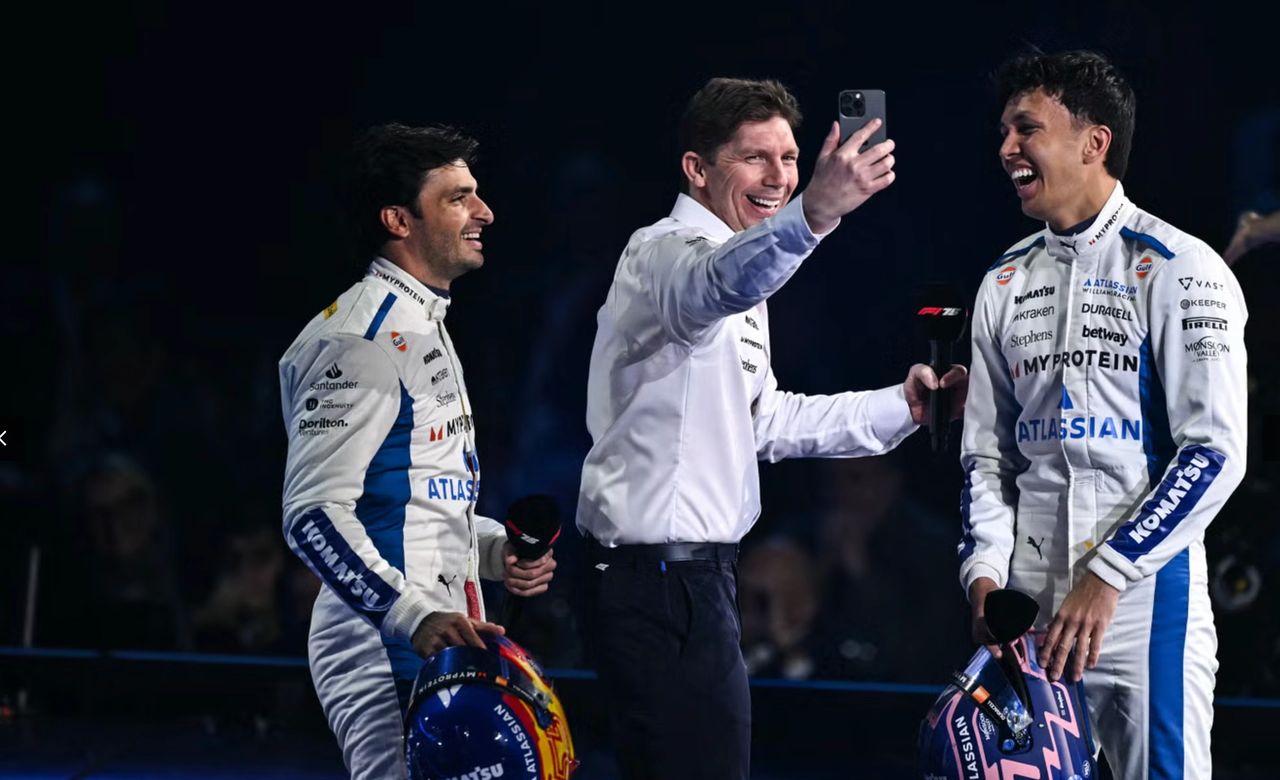
Formula 1 moves too fast for sentiment. For all its romanticism, the sport is a machine — unrelenting, unsentimental, and unforgiving. Teams live in the now. History hangs on walls. Trophies sit in cabinets, And if you’re not moving forward, you’re disappearing.
At Grove, they’ve lived both sides of that equation. They know what it is to dominate. And they know what it is to fade.
But under James Vowles, something is stirring — not loudly, not instantly, but deliberately. This isn’t about a comeback headline. It’s about building the kind of foundation that doesn’t collapse under pressure.
And in 2025, it’s starting to show.
🧭 A Culture Shift That Begins With Admission
Williams’ fall wasn’t sudden. It was a slow, technical slide. Underinvestment in infrastructure, misalignment in technical leadership, and a shifting power unit landscape left the team stranded. While others modernised, Grove leaned on its legacy.
When Vowles arrived in early 2023, he didn’t pretend otherwise. In one of his first interviews, he admitted the scale of the challenge: “We’re decades behind in key areas.”
That admission wasn’t defeatist. It was foundational. Because before Williams could move forward, they had to acknowledge where they stood.
What followed was not flashy. It was structural.
Vowles began modernising the organisation’s architecture—not just facilities but workflows. Recruitment intensified, with quiet but significant hires from rival teams. Internal accountability shifted. Strategy departments were given more autonomy. The simulator programme was refined. Perhaps most importantly, Grove began operating with long-term intent, not short-term panic.
🔧 The FW47: A Platform, Not a Pinnacle
By 2025, the signs of that shift were no longer subtle.
The FW47 is not a title contender—it’s not designed to be—but it is reliable, aerodynamically stable, and—crucially—predictable. In a sport where inconsistency has repeatedly killed midfield campaigns, predictability is a performance weapon.
The car works across different track profiles, responds well to setup changes, correlates strongly with simulator data—a significant step forward from previous seasons, and can comfortably run at the front of the midfield in clean air.
Alex Albon continues to extract everything from it. His racecraft has always been sharp, but in this environment where his feedback is central to development, he’s become more than just a driver—he’s become an anchor.
Williams aren’t just back in the points — they’re part of the conversation again. Fifth in the standings tells its own story, but the real shift is subtler. They’re not waiting for chaos to climb the order; they’re qualifying inside the fight and staying there. Q3 appearances are no longer a surprise. Race-day strategy is confident, not cautious. And when opportunities open up — whether through pace or precision — Williams are taking them. This isn’t survival. It’s resurgence. Measured, yes. But undeniable.
The results may not always catch headlines, but they’re forming a pattern — and in Formula 1, patterns matter more than peaks.
📝 The Carlos Sainz Decision: Not a Gamble — a Calculation
Driver moves in Formula 1 often follow a familiar pattern: upward mobility, stable money, or championship opportunity.
Carlos Sainz’s move to Williams breaks that mould.
Here’s a driver in his prime. A race winner. A former Ferrari front-runner who outperformed expectations and held his own under pressure. He didn’t need a lifeline. He had options — including Audi. But he chose Williams.
Why?
Because behind closed doors, he was shown a vision, a timeline, a 2026 chassis concept, power unit development, facility upgrades, and an Organisational philosophy. In short, a plan—not for tomorrow, but for the next five years.
Sainz didn’t join for a payday. He joined to lead, to be a cornerstone in a project that’s not yet finished but no longer fictional.
And his arrival will reshape everything: driver market perception, engineering recruitment, and perhaps most critically, how the rest of the paddock treats Grove.
Williams is no longer a fallback. It’s a destination.
🚀 2026: A Regulation Reset That Williams Are Ready For
Formula 1 doesn’t offer many second chances. But every so often, the rulebook flips — and when it does, those who are ready don’t just catch up. They leap forward.
The 2026 regulation overhaul is more than a technical shift. It’s a recalibration of priorities: lighter cars, active aerodynamics, and new power unit architecture. Efficiency will matter as much as outright speed. Agility — in both machinery and mindset — will be key.
For Williams, it marks a genuine inflection point.
Everything being built at Grove—from internal structures to long-term recruitment to the signing of Carlos Sainz while retaining the talent of Alex Albon—is with an eye on this moment. not just to participate but to position themselves at the heart of the new era. There are no illusions, no shortcuts, just a clear plan and the conviction to stick to it.
They’re not waiting for 2026 to save them. They’re preparing to meet it — on their terms.
When the reset comes, the most dangerous teams won’t be the ones that had the most. They’ll be the ones that know exactly what they need.
🎯 Relevance Before Results
The most telling aspect of Williams’ rebuild is not the car. It’s the tone.
The team no longer talks about returning to glory. They talk about systems, processes, and being in control of their own progress. It’s subtle. However, in Formula 1, the tone often reflects trajectory.
And at Grove, that trajectory is finally pointing upwards.
There will still be tough weekends. Midfield battles are ruthless. Resources aren’t unlimited. But for the first time in years, Williams doesn’t feel like a team hanging on.
It feels like a team that knows exactly where it’s going — and how it will get there.