


Post-race running gives Verstappen, Sainz, Hadjar, Tsunoda and Drugovich a taste of next year’s tyres
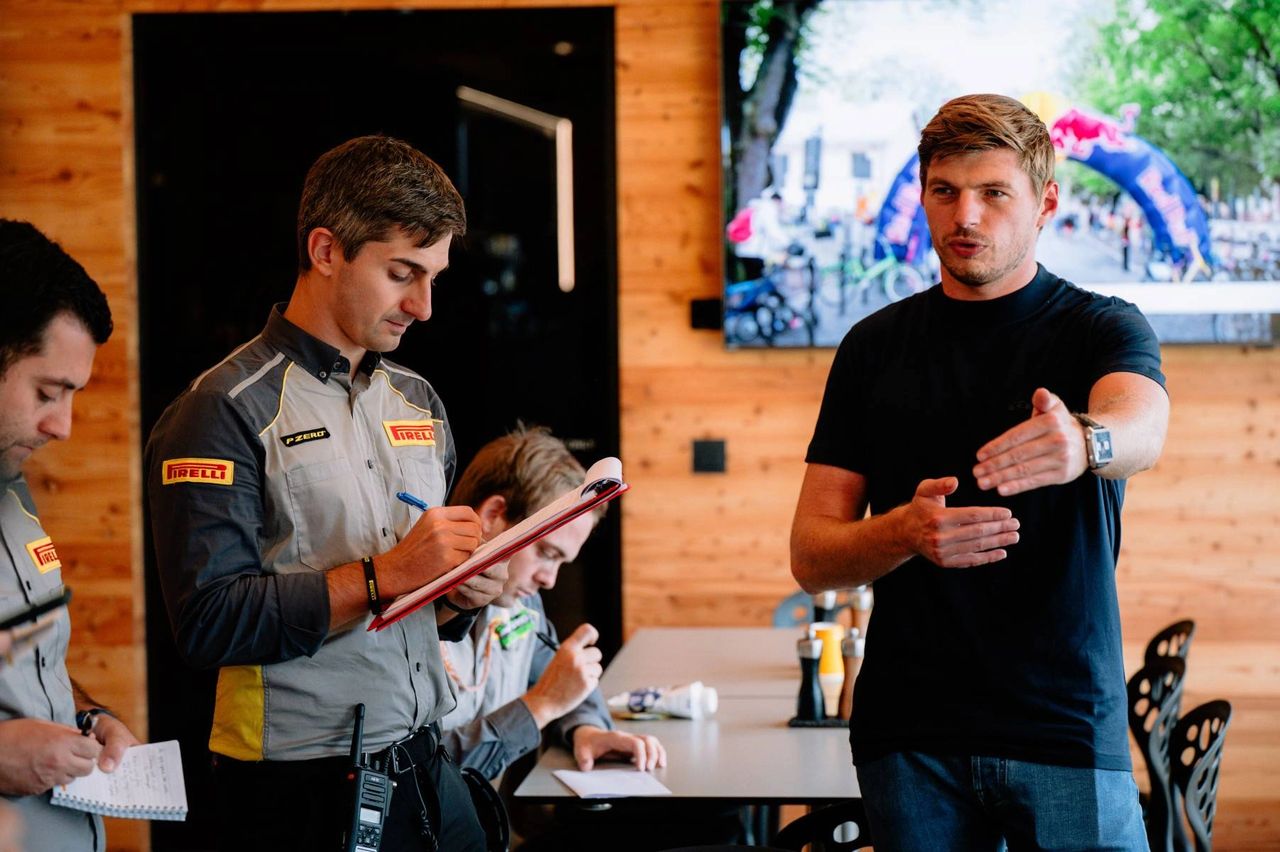
Monza didn’t fall silent after the Italian Grand Prix. Four teams stayed behind, rolling out prototype rubber for Pirelli’s latest test. The target? 2026.
Fresh from winning on Sunday, Max Verstappen was back in the car. This time not in pursuit of points, but data. Red Bull paired him with Yuki Tsunoda, while Aston Martin called on Felipe Drugovich. Williams put Carlos Sainz to work, and Racing Bulls handed mileage to rookie Isack Hadjar.
A reshuffled plan
The test was supposed to follow a neat split. Verstappen in the morning. Tsunoda in the afternoon. Drugovich logging miles alongside them. But with storms forecast, the programme shifted.
By lunchtime Williams and Racing Bulls were drafted in, keen to bank laps before the rain arrived. Both adapted their current cars — Aston Martin with the AMR25, Williams with the FW47 — modified to accept the prototype tyres. Red Bull and Racing Bulls used mule machinery, one based on the 2023 RB19, the other on last year’s VCARB01.
What was on the table
The construction of the 2026 tyres was signed off on 1 September. What remains to finalise is the compound range. That’s what Monza was about.
Seven sessions have already been staged this year. The brief is consistent. Stick with 18-inch rims, but narrow the tread width — 25 mm less up front, 30 mm trimmed at the rear.
The morning belonged to Verstappen. Fifty-nine laps in total, a best of 1’24’’117. He handed over to Tsunoda, who managed 63 laps and dipped under his team-mate’s mark with a 1’23’’826.
Drugovich ran deep into triple figures. 118 laps for Aston Martin, clocking a 1’23’’792.
Sainz squeezed 49 laps from the Williams with a top time of 1’22’’388, the quickest of the day. Hadjar rounded things off for Racing Bulls, logging 65 laps and a 1’23’’951.
As always in testing, the times mean little. Each driver followed a specific programme.
Compound work
All four squads sampled the softest end of the range. Racing Bulls and Williams cycled through C4, C5, and C6. Red Bull and Aston Martin also added the C3.
The day began with qualifying-style runs, chasing peak grip. Later sessions switched to long stints, mapping degradation. Ambient temperatures sat between 22°C and 27°C. The asphalt climbed from 24°C to 40°C.
What comes next
The weather will dictate day two. If the rain clears after the morning, slick testing resumes with Williams and Racing Bulls. If showers linger but don’t drown the track, Pirelli may pivot to wet development — running the Cinturato intermediates and full wets to define crossover points.
For now, the story is simple. Another box ticked in Pirelli’s 2026 build. Narrower tyres, new compounds, and a steady rhythm of mileage.
Want more Formula 1 coverage?
Dive into race reports, driver market news, and technical analysis in the Coffee Corner Motorsport F1 Hub.
Share the story. Grow the community.