


Fans hoped V8 engines could return in 2029, but discussions have stalled. Here’s what blocked the idea under the 2026–2030 rules and what alternatives are realistic.
Key points
– F1 V8 2029 discussions have stalled — no approval
– 2026–2030 power unit rules and sustainability targets block a V8 return
– Alternatives within the 2026 hybrid framework explained
– What teams and F1 leadership have indicated so far
– What fans should realistically expect from 2027–2030 engines
Mohammed Ben Sulayem’s push to bring back V8 engines in 2029 has failed. Manufacturers closed ranks around the 2026 hybrid cycle, forcing the FIA to shelve its summit before it started.
Updated on 20 September 2025 — Added context on 2026–2030 engine rules.
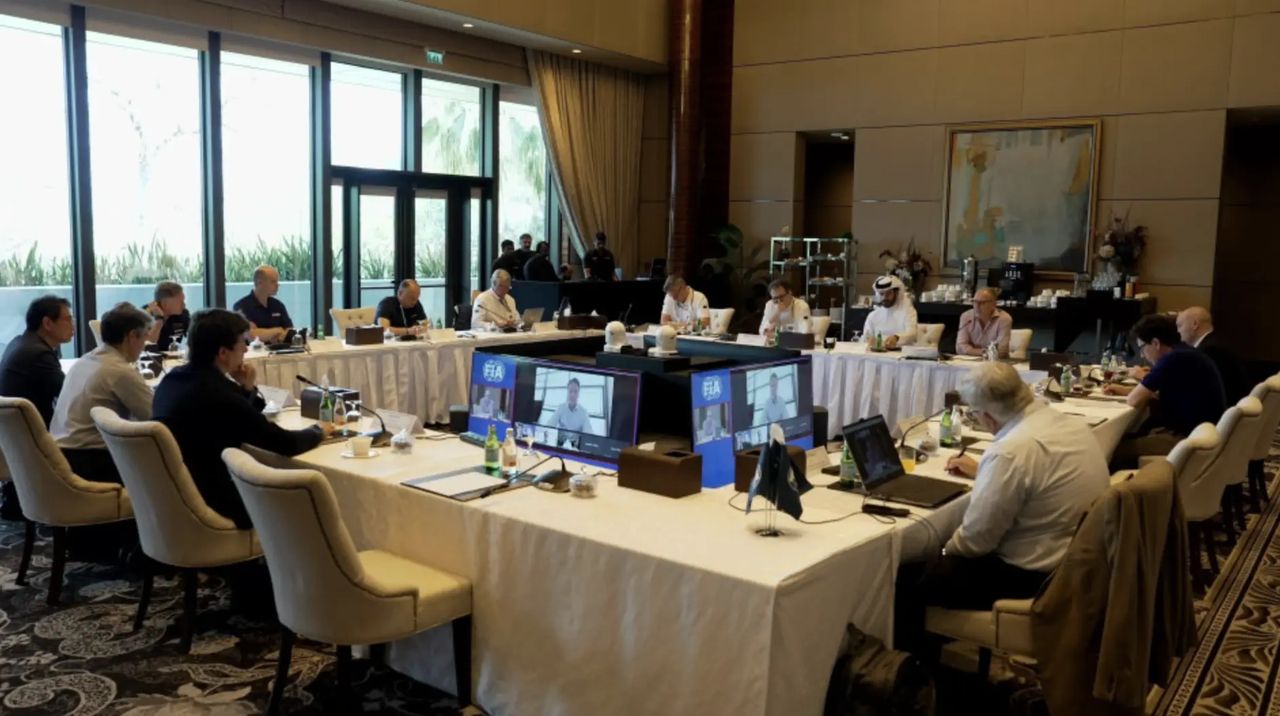
The engine summit that never was tells you everything about the current politics of Formula 1 power units and the power the teams still hold. A London meeting planned for 11 September to debate a 2029 return to V8 engines was cancelled before the doors opened.
The reason was simple. No consensus. Without a majority, Mohammed Ben Sulayem’s second attempt in six months to change F1’s engine path collapsed before the discussion even began. Once again, the sport’s leadership showed no shared vision on how it should progress.
The second setback for Ben Sulayem
The FIA president has pushed to put simpler engines back on the agenda. First came his attempt to revive V10s earlier this year, which was struck down in Bahrain. Hybrid systems and sustainable fuels were described as non-negotiable pillars of F1’s future.
Undeterred, he shifted focus to V8s. The idea was a 2.4-litre naturally aspirated engine with a smaller hybrid system. In theory, lighter and cheaper than today’s turbo hybrids. A compromise for all sides, including fans who still crave the screaming sound of old.
The case was framed around cost control, spectacle, and simplicity. Loud, visceral cars. A reset to a formula many still link to F1’s golden age. Even today, advertisers use V10 or V8 soundtracks to grab attention. It proves the theatre of sound still defines Formula 1 in the public eye.
But the reality is that F1 has already tied its technical, financial, and commercial identity to the 2026 hybrid era. The flag is planted.
Where the manufacturers stand
The split among engine suppliers was sharp.
- Red Bull Powertrains/Ford and Cadillac F1 were open to a 2029 reset. They saw value in cheaper, simpler engines as an entry point.
- Mercedes and Ferrari were not opposed in principle but wanted any change pushed to 2030. They were wary of rewriting the rulebook early.
- Audi and Honda were firmest in opposition. They argued the 2026 rules must run the full five-year cycle. Their new V6 hybrid investments run into the billions. An early switch would write off technology only three years old.
With two manufacturers blocking and others lukewarm, the summit had no chance. Politics around expected 2026 competitiveness also plays a part. With the engine freeze lifted, power unit development becomes decisive again. If you expect a strong 2026 package, you have no reason to change early. If you expect to struggle, a 2029 reset looks more attractive.
Why 2026 cannot be cut short
The new power units arrive next season. The 1.6-litre V6 turbo hybrid format remains, but the hybrid share rises to roughly 50 percent, more than double the current level.
For the first time, chassis and aero rules have been written around the engine’s characteristics. Active aerodynamics, energy deployment profiles, and fuel flow are all locked to this formula.
Compromises are already visible. The ruleset was built more to bring manufacturers in than to create a perfect technical concept. Audi pushed for extra front-axle regeneration. Others resisted. The MGU-H was dropped to reduce complexity. Porsche considered entry but did not sign.
The result pleases nobody fully. Some insiders worry the cars could be energy-starved and too heavy. Others see 2026 as a step forward that needs time. Teams are cautious about committing to an early change while doubts remain. Established suppliers feel overlooked as the FIA courted new entrants. Renault’s exit added tension. The standoff is political as much as technical.
A question of authority
For Ben Sulayem, this is a second defeat on the same issue. Two attempts. Two rejections. No movement on a topic many fans care about.
The FIA governs the championship, but on rules that drive manufacturer investment it lacks unilateral power before 2031. Authority sits with the companies building the engines, and they are not ready to give ground.
Ford CEO Jim Farley summed it up earlier this year: “Ford is very committed to partial electrification for performance.” New entrants want what they signed for. Established suppliers want to be heard after making compromises for 2026.
Fuel and finance
Sustainable fuels, due to debut fully in 2026, carry a high cost. Team bosses have warned fuel bills could triple, rising from around four million dollars to about twelve million per year. One joked: “The fuel is sustainable. The finances aren’t.”
Fuel sits outside the cost cap, but the expense still matters. Adding a fresh V8 project on top of that outlay is unrealistic. It would mean double investment before the 2026 engines have even turned a wheel.
The road to 2031
The governance agreements expire at the end of 2030. That is when the FIA regains authority to impose new rules without majority support.
Authority is not the same as leverage. Forcing naturally aspirated engines could trigger withdrawals. Audi and Honda in particular would likely walk rather than abandon hybridisation. They are still relatively new commitments.
Some suggest 2030 as a fallback if the 2026 rules flop and four suppliers align. But the firm opening is 2031.
Nikolas Tombazis has said exploratory talks are already underway. Hybrid systems and sustainable fuels are locked into the base of whatever comes next. The V8 idea is not dead, only delayed. The earliest it could return is 2031.
FAQ: F1’s engine rules explained
When do the current engine regulations change?
The next major change is in 2026, with new hybrid power units. That cycle runs to the end of 2030.
Who are the confirmed F1 engine suppliers from 2026?
- Mercedes
- Ferrari
- Red Bull Powertrains/Ford
- Audi
- Honda
What about Cadillac F1?
Cadillac will join as the 11th team in 2026. They will run Ferrari engines until 2029. Cadillac’s power unit project is scheduled to begin in 2029, with an option to extend Ferrari supply if needed.
What will the 2026 engines look like?
1.6-litre V6 turbo hybrids with an approximate 50/50 split between internal combustion and electrical output, and 100 percent sustainable fuels.
Why did the 2029 V8 plan fail?
There was no consensus. Audi and Honda wanted to protect 2026 investments. Mercedes and Ferrari wanted any change later. Only Red Bull Powertrains, Ford and Cadillac supported an early reset.
When could F1 switch back to V8s or another formula?
Not before 2031. The 2026 regulations are locked until the end of 2030, so the next possible reset is 2031.
Did F1 approve V8s for 2029?
No – talks stalled with no approval.
What rules prevent a V8 return?
Power unit regulations and sustainability targets under the 2026 framework.
What could replace the idea?
Tweaks within the 2026 hybrid framework remain the only realistic path.
Want more Formula 1 coverage?
Dive into race reports, driver market news, and technical analysis. 👉 More Formula 1 news and race coverage
☕ Coffee Corner Motorsport. News made by a fan, for the fans. Straight from the Shed.
Share the story. Grow the community.