


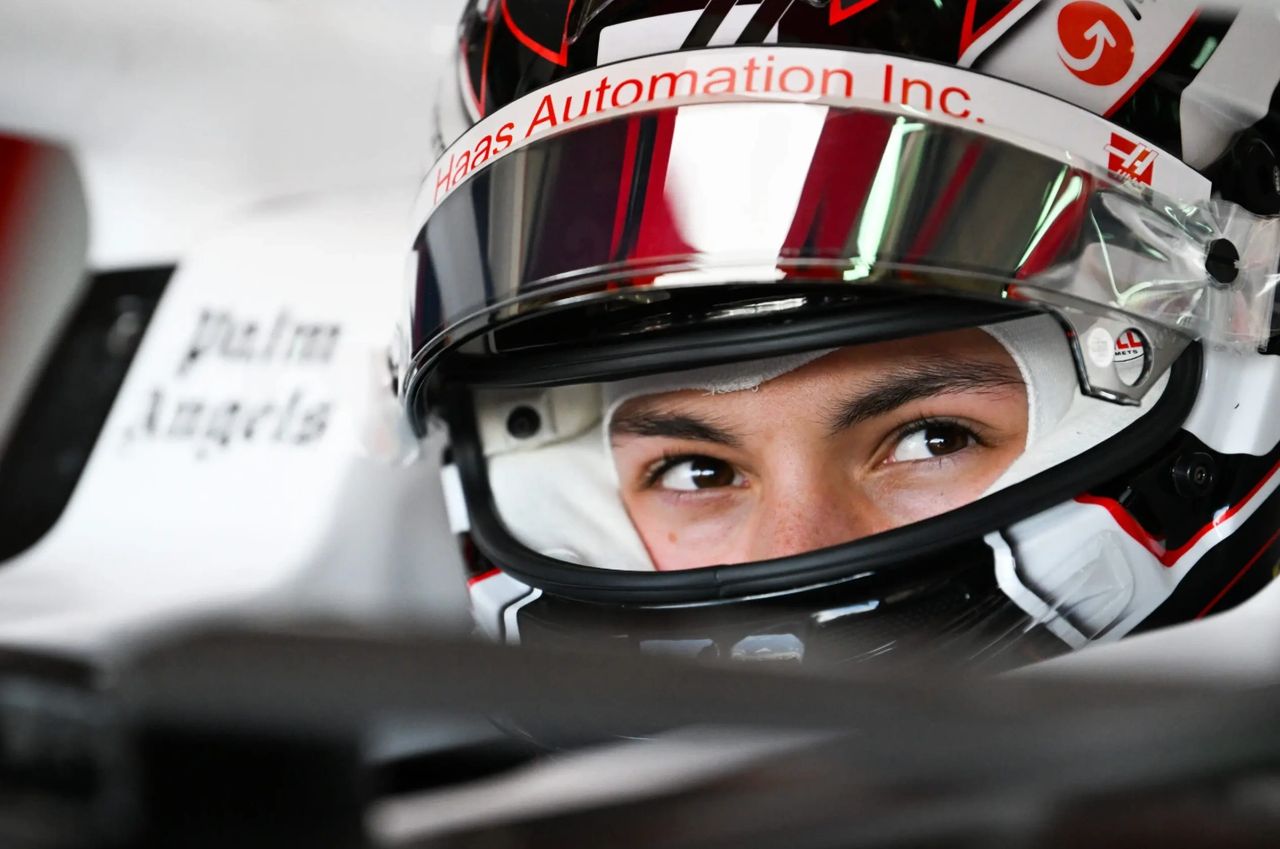
In a championship defined by marginal gains and brutal precision, it wasn’t a lock-up or a track limits overstep that caught Oliver Bearman out at Imola — it was 3.3 seconds, a red flag, and the quiet machinery of race control.
Bearman, still only 20 and in the middle of his first complete Formula 1 campaign with Haas, had just delivered a lap that placed him provisionally tenth in Q1. On a weekend where the margins were tighter than ever, it was precisely the performance Haas needed — composed, clean, just enough.
And then the timing screen blinked. The lap time was deleted.
The reason? A red flag had been called for Franco Colapinto’s crash at Tamburello. Bearman had crossed the finish line 3.3 seconds after the signal was officially triggered — and the stewards deemed it too late.
But Bearman insists the red flag wasn’t visible from the cockpit.
“We get the red light on our dash,” he explained. “That, for me, didn’t happen until quite a way after I crossed the line.”
“I crossed the line, and everything was green. For me, it was clear.”
Protocols vs. Perception
At the heart of Haas’s frustration is not the regulation itself — Article 2.5.4.1b of the Sporting Code allows stewards to delete lap times set after a red flag. Rather, it’s the gap between protocol and perception.
Bearman wasn’t ignoring a flag. He wasn’t taking a chance in the final sector. He was, by his own reckoning and the video evidence, finishing a lap before the signal ever reached him. The red flag may have been live in Race Control, but in the cockpit, the world was still green.
“I feel like once they make a decision – even if it’s wrong, clearly wrong – they’re not going to turn back on it,” Bearman added. “And that seems a bit harsh.”
It’s a revealing comment — not petulant, but telling. A young driver absorbs not just the demands of the car but the mechanisms of the sport that go beyond racing lines and apex speeds.
Haas Escalates — Quietly
Haas, for their part, didn’t launch into open protest. But they did request formal clarification from the FIA, seeking to understand how race control decisions are communicated and, crucially, how a red flag’s timing interacts with what a driver sees — or doesn’t — at full tilt.
“There’s a disconnect between the red flag timing in the control room and the indicators available to the driver,” a Haas representative told press afterwards “We’re not disputing the need for safety protocols — we’re asking for consistency and clarity in how they’re applied.”
For a team like Haas — often overlooked amid bigger midfield storylines — these details matter. Not just in championship points, but in perception. In a field where visibility means viability, Haas are keen to make sure their rookie is seen, understood, and treated fairly.
Reading the Moment
Bearman’s Imola performance, even with the lost lap, was another chapter in a quietly impressive debut season. He’s not grabbing headlines with daring overtakes or dramatic radio calls, but he’s showing the kind of metronomic development teams crave — fast when it counts, measured when it matters. However his weekend never recovered from this finishing P17 after starting P19.
There were no outbursts post-session. No gesticulations. Just a young driver trying to square what he felt in the car with what appeared on the screen. It’s a different kind of maturity — not showy, but rooted.
And in that moment, sitting in the Haas garage preparing for Q2 as his name slipped off the timing screens, Bearman likely learned more than any simulator run could offer. In Formula 1, fairness is often a matter of interpretation. That clarity is a luxury. And that sometimes, the red flag falls before you even know the rules of the game have changed.
A Wider Conversation?
The timing of this incident adds weight to the moment. Across the paddock, conversations around stewarding consistency have resurfaced — from controversial penalties to debates over start procedures in F1. The Bearman case may seem minor in the standings, but it touches something much larger: the need for trust between driver and system.
And it’s not just Haas asking for answers. Other teams will be watching how the FIA responds — not just in Imola, but in the protocols they carry into Monaco and beyond.
Because if a driver can lose a lap — and a Q2 appearance — based on a signal he never saw, the conversation can’t stop at “it’s in the rules.”
Oliver Bearman left Imola with no points and no Q2 appearance. But he also left with the kind of experience that sticks — the kind that shapes how a driver reads a race weekend, reads a team, reads the sport itself.
In the grand theatre of Imola, it was a quiet subplot. But, one worth reading more than once.