


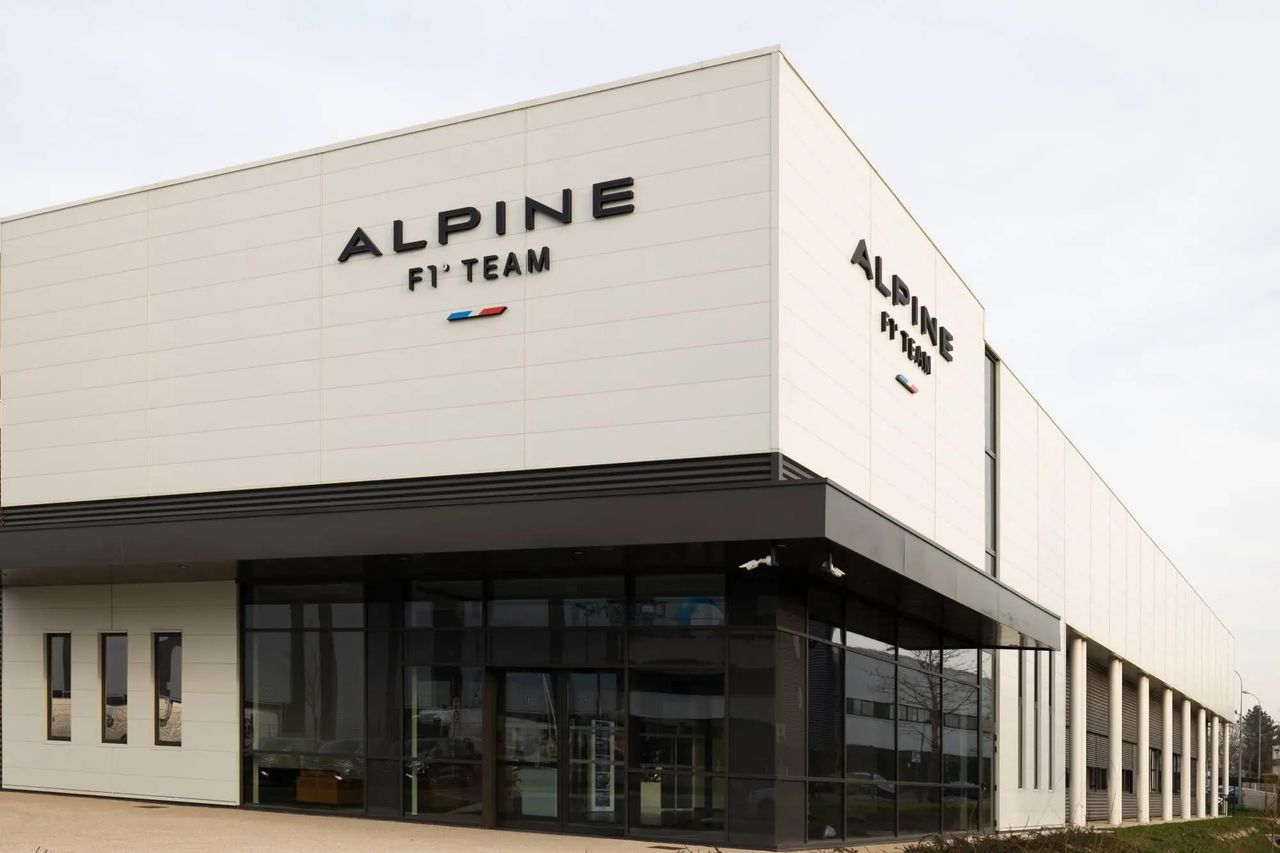
Alpine insist they’re not for sale. Renault say they’re committed. On the surface, the message is steady. Look closer and the story changes.
A Pattern of In and Out
Renault’s F1 history is one of arrivals and exits. Works team in 1977. Out by the mid-80s. Back as an engine supplier in the 90s, powering Williams and Benetton to titles. Bought Benetton outright in 2000. Two Alonso championships. Then the Crashgate scandal and the financial crisis forced them out.
By 2010 the team was Lotus. In 2016 Renault returned, promising a rebuild. Rebranded Alpine in 2021. They spoke about long-term goals. The results never came. And now the retreat signs are flashing again.
A Programme Turned Embarrassment
This latest chapter hasn’t just underdelivered. It has embarrassed Renault’s board.
The engines have been underpowered for years. The gap to the top teams never closed. Every winter brought promises of progress. Every season started with excuses.
The damage grew worse with Red Bull. Once Renault’s strongest partner, the relationship ended in acrimony. Four titles together, then public attacks. Christian Horner called the Renault engines uncompetitive and unreliable. In the Netflix era, those comments landed hard. Millions of new fans heard them. Every failure was amplified. Renault’s weaknesses weren’t hidden in the paddock. They were broadcast worldwide.
Then came the driver sagas. Fernando Alonso, once the champion who built Renault’s reputation, walked out to Aston Martin. And the Oscar Piastri fiasco was even worse. A contract dispute played out in public, with McLaren swooping in. Alpine lost their academy jewel in a legal mess.
What should have been a point of pride became a liability. And when that happens, history shows Renault rarely stay long.
The Consortium Buy-In
In 2023 Renault sold 24% of Alpine Racing Ltd to Otro Capital, RedBird Capital and Maximum Effort Investments. The faces attached made headlines. Ryan Reynolds. Rob McElhenney. Travis Kelce. Anthony Joshua. Reports put the deal near $200m, valuing the F1 team then at about $900m.
But the real story sat in the details. The investors bought into Alpine Racing Ltd, the F1 team at Enstone. They did not touch Viry-Châtillon, the Renault engine arm. That stayed ring-fenced in Paris.
That separation was deliberate. Outside money in the team. Renault keeping the engine business separate. Which means if a sale comes, it’s clean. A buyer takes Renault’s Alpine stake, leaves the celebrity investors in place, and controls a full F1 entry without Viry.
In today’s market, that is valuable. The new Concorde Agreement has set the anti-dilution fee for a 12th team at astronomical levels. Andretti’s blocked attempt proved how hard it is to enter from scratch. Alpine is the shortcut. Buy the stake. Skip the politics. Race tomorrow.
The Engine That Never Was
Engines were always Renault’s pride. Even when they didn’t run a works team, they supplied winners. Williams in the 90s. Benetton too. Then Red Bull, four titles with Vettel.
Which is why Viry’s story hurts so much. Development of the 2026 power unit was underway. Millions spent. Architecture mapped. Dyno work already running. Then the order came: stop. Shelved. Written off.
For the first time in decades Renault weren’t just scaling back. They were walking away. No customer supply. No future works programme. Nothing.
Instead, Alpine signed for Mercedes engines. A branding defeat in Paris, but a survival move in Enstone. Mercedes power gives podium potential. Podiums lift value. And valuation matters more than heritage.
Briatore’s Incentives
Enter Flavio Briatore. The wildcard. Back in, but not as a classic advisor. Reports in France say he takes commission on new sponsors and, more tellingly, a cut if Alpine’s value rises by a set figure by the end of 2026.
That is not about planning for 2030. It is about preparing the team for sale.
The Clean-Up Job
The clean-up has been relentless. Enstone’s mortgage cleared. Customer supply closed. Driver contracts kept short. Ownership already diluted by the consortium. Every move strips away complications and makes Alpine easier to buy.
With the engine arm kept separate, any buyer only takes on the F1 team. Take Enstone and you own the entry, the factory and the staff. No messy talks with Viry. No hidden liabilities.
It gets simpler still. One factory. Mortgage-free. One base of operations. For any investor, that is good business.
The Bigger Picture
Renault say Alpine isn’t for sale. But their history says otherwise. Every cycle has ended with an exit.
Now the signs are clearer than ever. Hollywood investors ring-fenced to the team. A shelved engine project. Mercedes power locked in. Briatore incentivised to raise the value. Accounts tidied.
And it’s not just Alpine. The whole grid has become an asset class. Williams were snapped up by Dorilton Capital. McLaren are majority-owned by Bahrain’s Mumtalakat fund, effectively under royal family control. Saudi wealth funds are circling too. Aston Martin has been reshaped by Lawrence Stroll’s consortium.
On the entry side, Andretti’s push collapsed. The business has moved to TWGlobal, now fronting Cadillac’s bid with General Motors backing. That only sharpens Alpine’s position. At a time when fresh entries are blocked, Renault’s team is one of the very few turnkey options left.
With Concorde entry fees sky-high, buying in is the only realistic path. Alpine sits in the sweet spot. A ready-made entry. A factory with no debt. An operation ring-fenced from Renault’s engine baggage. The cleanest acquisition on the table.
The Final Word
A few years ago the idea of a Mercedes-powered Renault chassis would have been unthinkable. Pride alone would have stopped it. Yet here we are. Alpine signed for Mercedes engines from 2026.
That decision says it all. Renault no longer see F1 as a showcase for their technology. They see it as an asset to polish, increase in value, and maybe pass on.
And in a sport where new entries are blocked and old names are being snapped up by investors, Alpine looks like the cleanest takeover target left on the grid.