


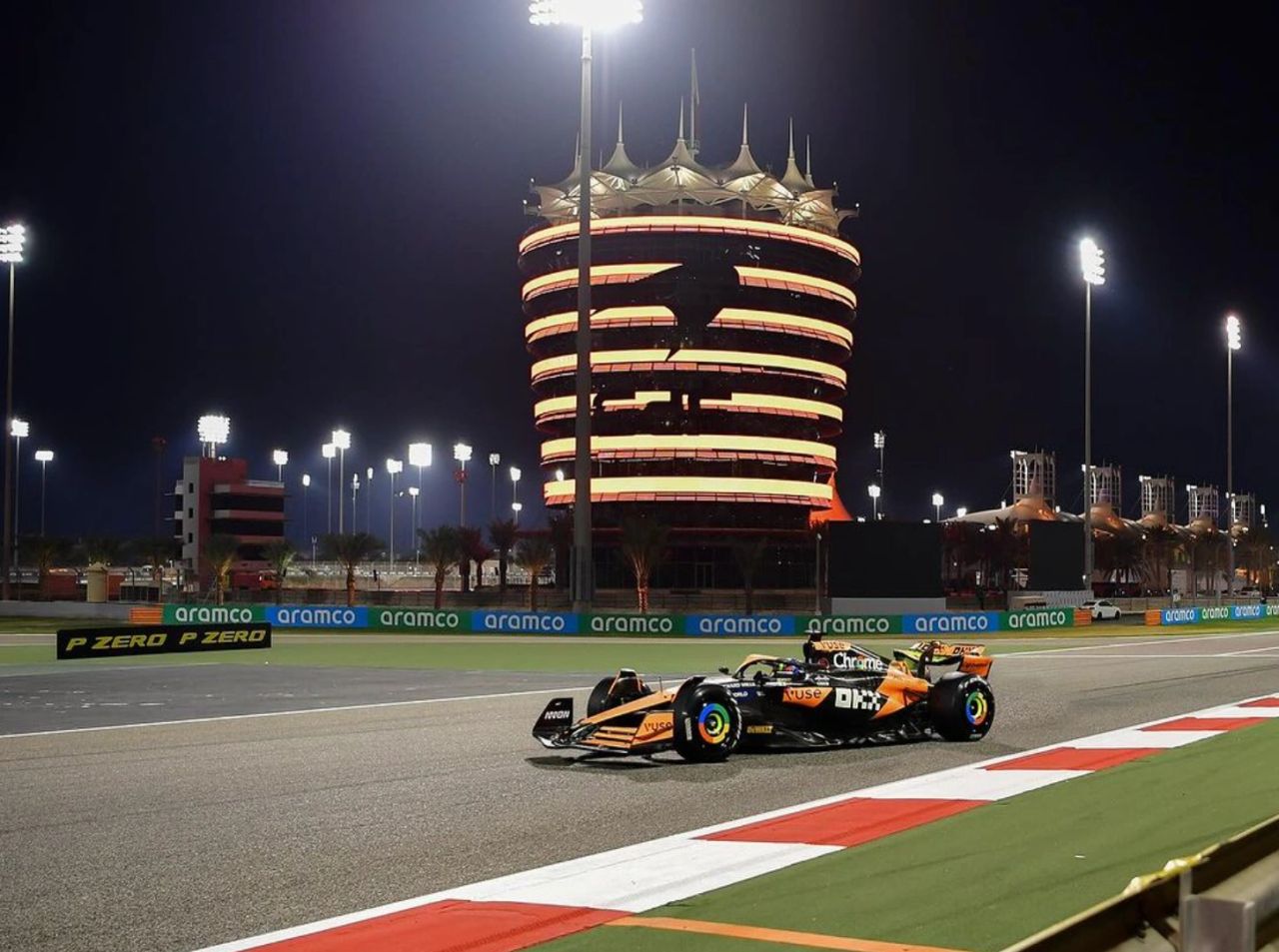
After a lacklustre Japan Grand Prix, Round 4 of the Formula 1 calendar returns to familiar grounds with the next stop on the F1 calendar, Round 4, in Bahrain. As the teams have already arrived here for pre-season testing, there will be a sense of familiarity for them as they prepare for this weekend. Here are my top headlines to watch out for:
1. Mercedes Weather Warning:
One of the biggest unanswered questions surrounding Mercedes’ performance in hot weather is whether they have resolved this issue. The 2024 W15 struggled in hot conditions, while it seemed to perform better in cooler climates like Las Vegas. However, the 2025 W16 has yet to experience significant hot weather despite three rounds with unusual weather conditions in pre-season testing and the recent races in Australia, China, and Japan, which were relatively low in temperature. With temperatures expected to rise in Bahrain this week, this race could provide valuable insights into whether Mercedes have finally found a solution to this problem.
2. Ferrari Updates or not?
Ferrari’s struggles at the start of the 2025 season are undeniable. Despite securing a sprint pole and a sprint win in China, these achievements have failed to mask the cracks in the Scuderia Ferrari that have become evident. The SF-25’s set-up seems to have fallen into a Mercedes-like pattern, requiring a low ride height for optimal performance. This was evident in Japan, where the team allegedly lifted the ride height to play it safe, resulting in a loss of valuable performance.
To address this issue, a new floor is ready and on its way to Bahrain. However, the team is divided on whether to use it. The Aero team is eager to install it on the car, as it is their development and they wouldn’t bring it without confidence in its effectiveness. On the other hand, team principal Fred Vasseur and chassis technical director Loic Serra, who was recruited from Mercedes, advocate for a delay, prioritising the resolution of other balance issues.
This internal strife raises the possibility of the two drivers splitting their set-ups, especially during the early stages of the weekend. A Thursday deadline has been set to make a final decision, but there’s no guarantee that a change in direction won’t be made if one proves more successful after that point.
3. Rookies Rule
With the teams already here for pre-season testing and the track being relatively low-risk for crashes, the teams are taking advantage of the opportunity to get their rookies in the car for the first practice session (FP1) on Friday. Of course, it’s an F2 and F3 race track, and this, coupled with the increase in rookie sessions from two to four this year, means the teams are eager to complete them, especially since the test data suggests that drivers who choose to skip this session won’t lose much valuable time after conducting testing here. So far, we have confirmed the following for FP1, and I anticipate more announcements to follow:
– Mercedes: Fred Vesti will replace George Russell.
– Aston Martin: Felipe Drugovich will replace Fernando Alonso.
– Williams: Luke Browning will replace Carlos Sainz.
– Haas: Ryo Hirakawa will replace Ollie Bearman.
– Ferrari: Dino Beganovic will replace Charles Leclerc.
4. Mclaren playing it safe?
One of the issues that arose in Japan was that McLaren faced a challenge caused by not selecting a team leader. While both Lando Norris and Oscar Piastri can lead the team to a championship, on paper, this should be a strong lineup. However, as we’ve seen in the past, having an established number one driver can actually be beneficial for the team. For instance, the rivalry between Senna and Prost, and Hamilton and Rosberg, demonstrated how it can all go wrong with two number one drivers. So, why is this an issue? You might ask, surely having two drivers competing for wins is advantageous for the team. Yes, it is for the constructors, as the 36-point gap that McLaren currently holds over second-place Mercedes is evident. However, the drivers’ championship is a different matter. Lando Norris is just one point ahead of Max Verstappen in second place, while Oscar Piastri is in third, 13 points behind Lando. In Japan, McLaren had an opportunity to take a risk and split their strategy to catch Max. However, they chose not to, fearing that it would favour one driver over the other. McLaren even pitted Oscar first in a peculiar move, which Christian Horner later admitted they expected Lando to follow within a lap or two. This made it easy to cover the pit stop by bringing Max in at the same time as Lando. An unusual slow stop by Red Bull almost gave Lando the lead, but ultimately, it worked out well. Max never really faced significant threat from the McLarens behind. Now, it’s up for debate what McLaren should have done. With all the facts available, we can discuss this further. However, one option was to go for the undercut by bringing Lando in early instead of Oscar, allowing Oscar to close up to Max and maintain pressure. Alternatively, they could have let Lando go long, allowing Oscar to overtake Max or even potentially take the lead. What will be intriguing to observe is whether McLaren can mount a championship bid for both drivers and constructors while simultaneously attempting to not upset either one of their drivers because at the moment they just seem to be taking points away from each other and with the Spanish GP deadlines for the front flexi wing looming which Red Bull are adamant will bring them back into play this could spell trouble for Mclaren.
Updates?
The 2025 season hasn’t seen many updates for the teams yet, and there could be several reasons for this. First, the calendar has changed, with Bahrain being the fourth race instead of the first. Additionally, there’s a sprint race among the opening couple of races. This, along with logistics and other considerations, makes it more logical for teams to wait before bringing track updates, especially in this triple header.
The advantage teams have with Bahrain is that we’ve already tested here, and they have a wealth of data to work with. This could lead to potential updates arriving this weekend, which could make a difference given the close grid.
However, there’s also the cost cap issue. With the 2026 development in full swing, teams are cautious about when to bring updates to avoid crippling their 2026 bid. On top of that, there are rear wing changes introduced by the FIA after Australia and front wing changes being introduced at the Spanish GP. These changes have required teams to use valuable time and money to fix, which wasn’t part of their 2025 development plan.
So whilst Japan may not have lived up to pre-race hype, there seems enough of a backdrop for Bahrain to shine under the desert skies this weekend.