


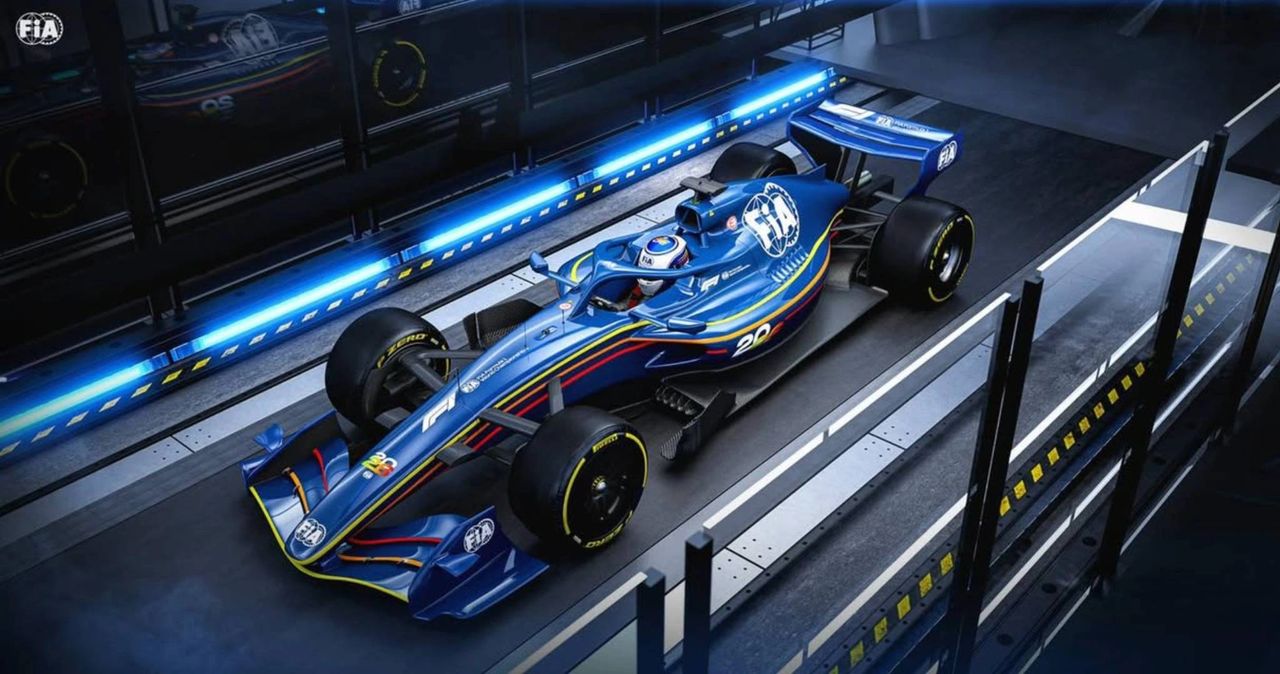
A key Formula 1 technical directive — TD018 — comes into force at the 2025 Spanish Grand Prix, introducing stricter limits on front wing flexibility. The FIA’s goal? To close loopholes around aeroelasticity and reduce the use of so-called “flexi-wings” that teams have used to gain aerodynamic advantages through shape-shifting components.
The directive limits front wing deflection to 10mm under a 1000N load, down from 15mm, and reduces trailing edge movement from 5mm to 3mm. The test method has also been refined to catch borderline designs and bring consistency across the grid.
This change comes amid growing scrutiny over front wing behaviour, particularly following incidents involving McLaren and Mercedes and previous concerns raised with Aston Martin.
🔧 What Is TD018?
TD018 clearly tightens the rules surrounding front wing deflection under load tests. Specifically, it reduces the amount the front wing is permitted to flex when static pressure is applied.
- Previous limit: 15mm deflection
- New limit: 10mm maximum when a 1000N load is applied
The FIA has also reduced the allowed movement of individual front wing elements’ trailing edges from 5mm to 3mm under a perpendicular 60N load.
To reinforce the directive, the FIA has revised its test methods for Front Wings to reduce ambiguity and prevent teams from gaining an advantage while still abiding by the regulations. It’s a targeted move to close a grey area in aerodynamic interpretation—one that’s quietly offered significant gains up until now.
It aims to eliminate the use of aeroelasticity—where certain components are designed to flex slightly under aerodynamic load—to create a dual-benefit effect: high downforce in corners and low drag on straights.
This subtle design philosophy has quietly reshaped modern F1 aerodynamics — and now the FIA is drawing a firmer line.
🧪 The Flexi-Wing Era That Sparked It All
The roots of aeroelasticity in F1’s current era go back further than 2024.
One of the earliest flashpoints came in early 2023 when the FIA raised concerns over Aston Martin’s front wing design. The issue? Observed lateral and inboard flex, which, under aerodynamic load, appeared to subtly alter the shape and angle of the wing elements — potentially offering aerodynamic benefits without breaching the letter of the regulations.
Though no formal protest was lodged, the FIA issued a clarification on load-bearing expectations, and Aston Martin subsequently revised its front wing construction—a quiet but clear admission that the component had been operating near the compliance threshold.
That moment set the tone for what followed.
By 2024, McLaren became the next focal point. Their rear wing, particularly during the Azerbaijan Grand Prix, appeared to exhibit a mini-DRS effect under high-speed load, prompting swift “proactive changes” from Woking and fresh scrutiny from the FIA.
Mid-season, the battle shifted to the front wings, with both Mercedes and McLaren pushing flexibility to the edge of legality. Their rivals took notice, and complaints grew. By winter, the FIA was conducting detailed reviews of static deflection protocols.
🧠 From Watchlist to Directive
That internal research led to TD018 — a directive designed to close the gap between regulation and reality.
While no team has been officially named, several are understood to have taken action ahead of Spain:
- McLaren and Mercedes are thought to have been running close to the previous limit and may now lose some of that subtle aerodynamic edge.
- Ferrari and Red Bull, reportedly behind some of the most vocal lobbying efforts, are monitoring rivals’ responses closely.
No team will admit to being caught out. But the signs will show in lap time — especially through Barcelona’s flowing sector one.
🔍 Coffee Corner Take
TD018 isn’t flashy. But it’s important.
This is the FIA trying to preserve trust—not just between fans and the rulebook but also between teams and each other. In an era where technical gains come from sub-millimetre details, a 5mm change in front wing deflection can be the difference between P3 and P7.
Barcelona, as always, will tell the truth.
But this time, it won’t just be the stopwatch doing the talking — it’ll be the stiffness of carbon fibre under load.