


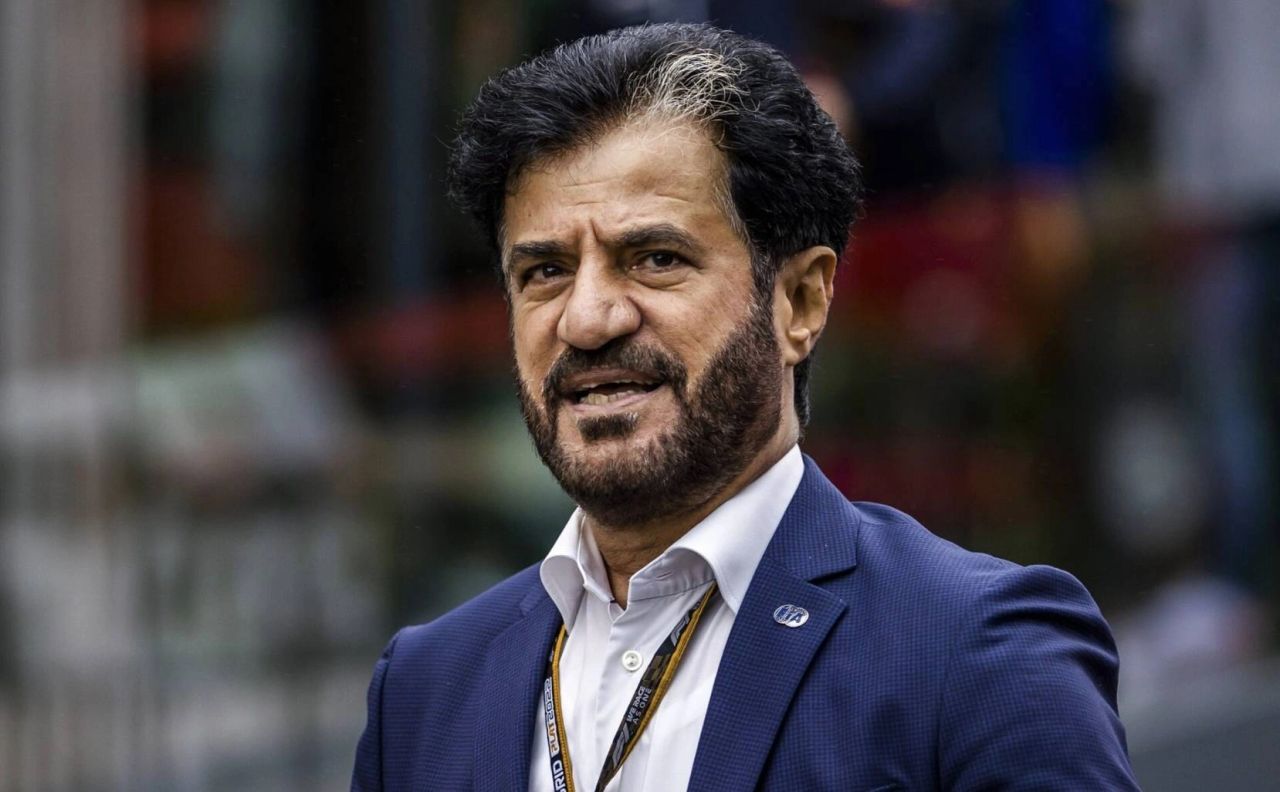
The FIA president confirms his 2025 re-election bid — but with governance disputes and a potential challenge from Sainz Sr. brewing, the road ahead is far from smooth.
💼 Continuity or Control? Ben Sulayem Declares 2025 Campaign
Mohammed Ben Sulayem has officially confirmed he will run for a second term as President of the Fédération Internationale de l’Automobile (FIA) — a role he first assumed in December 2021. The announcement came during the Monaco Grand Prix weekend, amid swirling speculation about the future of the sport’s governing body and its increasingly strained relationship with Formula 1’s commercial owners Liberty Media.
“I will stand again,” Ben Sulayem told reporters in the Principality. “There is a mission. There is a vision. And we have delivered.”
But behind that confident statement lies a high-stakes political landscape.
📉 From Financial Deficit to Profit — But At What Cost?
The FIA’s financial position has undeniably improved under Ben Sulayem. A reported €24 million deficit has been turned into a €4.7 million surplus, thanks to tighter oversight and expanded partnerships. His team also secured regulatory approval for General Motors and Cadillac’s F1 entry in 2026 — a bold move that drew sharp resistance from Liberty Media and some existing teams.
Yet critics say that financial recovery has come hand-in-hand with centralised control and contentious decision-making. Several long-standing figures within the FIA have departed since 2022, including Deputy President for Sport Robert Reid, who left in April, citing “a fundamental breakdown in governance standards.”
🧠 The Concorde Tensions: Liberty vs the FIA
At the heart of the current political pressure is the new Concorde Agreement — the tri-party deal that governs F1’s revenue split and power structure between Liberty Media, the FIA, and the teams.
While negotiations are ongoing ahead of the 2026 cycle, it’s essential to understand the foundation: the FIA sold the commercial rights to Formula 1 for a 100-year term back in 2001. That long-term deal handed over control of the sport’s commercial operations — broadcasting, sponsorships, and race promotion — to what is now Liberty Media, who purchased those rights from Bernie Ecclestone’s regime in 2017.
Under the current Concorde Agreement, Liberty and the teams benefit heavily from the global F1 boom. Race hosting fees, TV rights deals, and brand partnerships have surged in value. The teams receive a structured revenue share — and many have returned to profitability thanks to cost caps and growing popularity.
The FIA, by contrast, receives only a relatively small annual fee for its regulatory oversight and safety role. And with F1 now a financial juggernaut under Liberty’s watch, tensions have grown over the FIA’s attempt to assert itself on sporting decisions, car regulations, and — crucially — new team entries.
Earlier this year, Liberty publicly announced that all 11 teams had agreed to new commercial terms for the next Concorde cycle. But governance terms — the FIA’s say in how the sport is run — remain unresolved. The timing of that announcement raised eyebrows, with many interpreting it as an attempt to pressure the FIA into signing quickly or risk being side-lined from its own championship.
🏁 Sainz Sr. Looms: An Electoral Challenger with Sporting Clout?
Amid this backdrop, Carlos Sainz Sr. — two-time World Rally Champion and father of Williams driver Carlos Sainz Jr. — has openly admitted he is considering a run for the FIA presidency. He says his interest comes from a desire to give back to the sport and has stated he would entirely recuse himself from his son’s career to avoid any conflicts of interest.
Ben Sulayem appeared unbothered by the possibility. “Let him stand. That is democracy,” he remarked in Monaco, signalling a willingness to enter what could become a contested election.
Any candidate will need to assemble a full international ticket of vice presidents, spanning both sport and mobility. The challenge is less about popularity and more about coalition-building across 240+ national federations.
Whilst outside of the FIA there are calls for a change, within the Federation there is also strong support for another Ben Sulayem term due to the following reasons.
🏛️ 1. Rebalancing Power Between the FIA and F1’s Commercial Rights Holders
Many within the FIA believe Ben Sulayem is defending the FIA’s independence in the face of increasing control by Liberty Media (Formula 1’s commercial rights holder). Since the 100-year commercial agreement signed in 2001, the FIA has had limited say over the commercial direction of the sport.
Under Ben Sulayem, there’s been a visible pushback – asserting the FIA’s role in governance rather than just rubber-stamping Liberty’s plans. Some members support him for standing firm in this political power struggle, especially around issues like:
- Team entries (e.g. Andretti-Cadillac saga)
- Rulemaking authority
- Superlicence criteria (e.g. Colton Herta controversy)
🌍 2. Globalisation and Grassroots Expansion
Ben Sulayem is the first non-European FIA president, and many ASNs outside Europe feel better represented by him.
- He’s focused on developing motorsport in Africa, Asia, and the Middle East, where motorsport infrastructure and opportunities have historically been limited.
- His initiatives to lower costs and open up grassroots pathways have earned him support from emerging markets.
💰 3. Financial Reforms and Increased Transparency
Ben Sulayem’s term has involved tightening financial oversight within the FIA. After years of criticism over opaque processes, he’s been seen as modernising internal structures, improving governance, and initiating audit-backed reforms.
This is especially appreciated by smaller federations who want better resource distribution and clarity in FIA project funding.
🛡️ 4. Defensive Posture Against Commercial Overreach
There is growing concern within some National Sporting Authority (ASNs) that Liberty Media is trying to control not just F1’s show but also who governs it. By backing Ben Sulayem, members feel they’re backing the FIA’s right to remain a neutral and independent regulator — not just a service provider to F1’s owners.
⚖️ 5. Crisis Navigation and Media Resilience
Despite controversies (like early-season driver clashes with stewards or tension with F1 teams), Ben Sulayem has survived calls for resignation and internal pressure. Many ASNs may now view him as:
- A resilient leader who can take the heat
- Someone willing to challenge powerful stakeholders publicly
That earns him loyalty from those who value a strong president during turbulent times.
🔎 Coffee Corner View: Motorsport’s Election of the Decade
With the FIA presidency up for grabs in December 2025, the battle for control over motorsport’s future is on. From electric expansion to junior ladder reforms and escalating super licence fees, the next President will shape not just the future of F1, but also the structure and philosophy of global motorsport itself.
As Liberty Media pursues more commercial autonomy and teams call for regulatory stability, the FIA must re-establish trust or risk being side-lined. Whether Ben Sulayem can navigate that storm — or whether an opponent like Sainz Sr. can unify opposition — could redefine motorsport governance for the next decade.